Many of us go home for Thanksgiving. We often think of home as being a physical place, but I think it's wherever our loved ones are at any given moment. Sort of like Air Force One: it's not the president's plane, it's whatever plane the president happens to be on. This is awesome. So is Thanksgiving.
So I'll close the week out by talking about one of our greatest retired singer/songwriters: Billy Joel. William Martin Joel hasn't made an album of pop songs in 15 years, though he occasionally trots out a new single or live recording. Before he hung up his hat, he made sure he was one of the top-selling artists in history and a multiple Grammy winner. He's also a member of the Rock and Roll Hall of Fame and the recipient of several honorary degrees despite being a high school dropout. So kids, if you're going to quit school, at least practice those scales.
"You're My Home" is indicative of Joel's early period. He hadn't yet found his distinctive voice, sounding thinner and less confident than the singer he'd become. It sounds strangely like Jim Croce, too, but that's not a bad thing. (A few years later, other artists would be imitating Joel; listen to Bruce Springsteen's "Hungry Heart" again).
The lyrics were Joel's way of telling his first wife that even though they ain't got money, he's so in love with his honey. "Home could be the Pennsylvania turnpike," he croons, "Indiana's early morning dew /High up in the hills of California /Home is just another word for you." Corny, yes, and Billy's admitted it, but it's true.
My brother has suggested an alarm clock that plays Billy Joel music. His reasoning, and I agree, is that you cannot wake up in a bad mood if you are listening to "Only the Good Die Young." I would never get tired of it. Christie Brinkley apparently did, but I wouldn't.
TODAY'S RECOMMENDATION: "You're My Home" by Billy Joel
AVAILABLE ON: Piano Man; iTunes
Friday, November 28, 2008

Thursday, November 27, 2008
THANKSGIVING: Thank You, etc.
I truly believe it's the song, not the singer, that matters. I have to. I've bought all those Bob Dylan records. But great singers are like great salesmen, and you'll end up buying no matter what it is. This isn't to say a bad song can sound great, but something that might seem unremarkable on a lyric sheet can result in a musical performance of great emotional heft.
Take Natalie Merchant's "Kind and Generous." The top single from her 1998 album Ophelia, it reads like a Hallmark card, the sort of thing you send your grandmother after a particularly large birthday check. The words aren't overly sappy, just simple, nothing special. But Merchant's light, jazzy voice makes them soar. The melody and production, also by Merchant, are also noteworthy.
I once had a friend who, as a classically trained singer, dismissed Merchant's singing as thin and amateurish. It's true that Merchant is no Celine Dion, but isn't that precisely why she's better than Celine Dion? She has a way of caressing a melody, letting her billowing contralto wrap around the words and notes rather than pulverize them. She's no diva, and that is her talent.
The success of Merchant's solo work in the 1990s (she had previously been the lead singer of alt-rockers 10,000 Maniacs) made her one of America's top female singer-songwriters. She was a main attraction at the famous Lilith Fair late in that decade. Nobody makes more fun of Lilith Fair than me, but hell, songs like this almost make me wish they'd hold another one. Just don't tell Jewel where it'll be.
TODAY'S RECOMMENDATION: "Kind and Generous" by Natalie Merchant
AVAILABLE ON: Ophelia; iTunes
Take Natalie Merchant's "Kind and Generous." The top single from her 1998 album Ophelia, it reads like a Hallmark card, the sort of thing you send your grandmother after a particularly large birthday check. The words aren't overly sappy, just simple, nothing special. But Merchant's light, jazzy voice makes them soar. The melody and production, also by Merchant, are also noteworthy.
I once had a friend who, as a classically trained singer, dismissed Merchant's singing as thin and amateurish. It's true that Merchant is no Celine Dion, but isn't that precisely why she's better than Celine Dion? She has a way of caressing a melody, letting her billowing contralto wrap around the words and notes rather than pulverize them. She's no diva, and that is her talent.
The success of Merchant's solo work in the 1990s (she had previously been the lead singer of alt-rockers 10,000 Maniacs) made her one of America's top female singer-songwriters. She was a main attraction at the famous Lilith Fair late in that decade. Nobody makes more fun of Lilith Fair than me, but hell, songs like this almost make me wish they'd hold another one. Just don't tell Jewel where it'll be.
TODAY'S RECOMMENDATION: "Kind and Generous" by Natalie Merchant
AVAILABLE ON: Ophelia; iTunes
Wednesday, November 26, 2008
THANKSGIVING: Sweet Baby James
I heard a James Taylor song today on the radio, and I couldn't stop smiling. What is it about JT (the original JT, that is) that just oozes inner peace? It could be the even baritone voice, never cracking, never straining, never quavering in the slightest. It might be the gentle steel fingerpicking, always elegant but never smooth jazz-boring. Maybe it's the way he can write about human emotions without ever resorting to hoary cliches or, on the other end of the banality spectrum, navel-gazing confessional muck.
It's not because Taylor's personal life has been a smooth one. In the late 1960s, he was institutionalized for mental illness and drug addiction. He also lost one of the most magnificent heads of hair in pop history. A song like "Something in the Way She Moves" is so wistful, you wonder if this guy ever leaves his bed. Even when he sings a happy song like "How Sweet It Is (To Be Loved By You)", he doesn't seem to believe the feeling will last.
I guess James Taylor makes me happy because his warm, conversational delivery makes every emotion sound natural. Emotions, even unpleasant ones, are key components of the human experience. Taylor is a singer of great emotional power who never seems to get overwhelmed by it, always staying calm and encouraging us to do the same.
On this Thanksgiving week, my thoughts turn to "Shower the People," Taylor's hit from 1976. In one of his most sweeping and nicely harmonized choruses, he encourages us to tell those we love just how we feel about them. "Things are gonna work out fine" if we let those feelings come out every now and then. It might be true that all we need is love, but it doesn't do us any good if we keep it to ourselves.
TODAY'S RECOMMENDATION: "Shower the People" by James Taylor
AVAILABLE ON: In the Pocket; iTunes
It's not because Taylor's personal life has been a smooth one. In the late 1960s, he was institutionalized for mental illness and drug addiction. He also lost one of the most magnificent heads of hair in pop history. A song like "Something in the Way She Moves" is so wistful, you wonder if this guy ever leaves his bed. Even when he sings a happy song like "How Sweet It Is (To Be Loved By You)", he doesn't seem to believe the feeling will last.
I guess James Taylor makes me happy because his warm, conversational delivery makes every emotion sound natural. Emotions, even unpleasant ones, are key components of the human experience. Taylor is a singer of great emotional power who never seems to get overwhelmed by it, always staying calm and encouraging us to do the same.
On this Thanksgiving week, my thoughts turn to "Shower the People," Taylor's hit from 1976. In one of his most sweeping and nicely harmonized choruses, he encourages us to tell those we love just how we feel about them. "Things are gonna work out fine" if we let those feelings come out every now and then. It might be true that all we need is love, but it doesn't do us any good if we keep it to ourselves.
TODAY'S RECOMMENDATION: "Shower the People" by James Taylor
AVAILABLE ON: In the Pocket; iTunes
Tuesday, November 25, 2008
THANKSGIVING: When You're Worried, And You Can't Sleep
In a few days, your television will start its relentless barrage of Christmas movies. Some are good, most are middling, and one stars Arnold Schwarzenegger and Sinbad. But 1954's White Christmas, directed by the prolific Michael Curtiz, is something you might actually want to watch every year. Sure, it's hokey, but you can catch Danny Kaye and Rosemary Clooney in peak form, and the Technicolor looks tastier than a candy cane. The main attraction, though, is the music by Irving Berlin.
Berlin was a giant of American song, composing "God Bless America," "Blue Skies," "Always," and hundreds more. He wasn't as clever as Cole Porter, but also not as cloying. He might not have had the effortless grace of the Gershwins, but his songs stick in your head like peanut butter in a dog's mouth. His work is all the more remarkable when you consider English wasn't even his first language. The Dr. Seuss-like wordplay of "Puttin' On the Ritz" was written by a guy who spent the first five years of his life in eastern Europe. Doesn't that impress you? And kind of make you feel like a shithead?
You're probably asking what this has to do with Thanksgiving. White Christmas was basically a jukebox musical, years before Mamma Mia! left its dark imprint on this earth. The song "White Christmas" debuted in the 1942 film Holiday Inn, becoming probably the most popular recording of all time, and Bing wanted an excuse to sing it again. Some other Berlin classics were lined up and a thin story concocted around them. In addition to the oldies, Berlin did contribute the previously unheard "Count Your Blessings Instead of Sheep," earning an Oscar nomination for Best Song.
This is what brings us to Thanksgiving. Though often considered a Christmas song, "Count Your Blessings Instead of Sheep" (not to be confused with the old hymn, "Count Your Blessings") is an openhearted appeal for us to consider what we appreciate most. If the Production Code had allowed Berlin to write a song called, "I Moved to this Country Without a Penny and Now I'm a Millionaire, So Quit Whining and Get Off Your Ass" he would have. But instead, we get this simple wisdom: "When my bankroll's getting small/ I think of when I had none at all/ And I fall asleep/ Counting my blessings."
The song provides White Christmas with one of its best moments. And though Bing could croon like no other, I've recently heard a beautiful recording by that Canadian temptress Diana Krall. I can tell you what her husband, Elvis Costello, is thankful for...
TODAY'S RECOMMENDATION: "Count Your Blessings Instead of Sheep" by Diana Krall
AVAILABLE ON: Christmas Songs; iTunes
Berlin was a giant of American song, composing "God Bless America," "Blue Skies," "Always," and hundreds more. He wasn't as clever as Cole Porter, but also not as cloying. He might not have had the effortless grace of the Gershwins, but his songs stick in your head like peanut butter in a dog's mouth. His work is all the more remarkable when you consider English wasn't even his first language. The Dr. Seuss-like wordplay of "Puttin' On the Ritz" was written by a guy who spent the first five years of his life in eastern Europe. Doesn't that impress you? And kind of make you feel like a shithead?
You're probably asking what this has to do with Thanksgiving. White Christmas was basically a jukebox musical, years before Mamma Mia! left its dark imprint on this earth. The song "White Christmas" debuted in the 1942 film Holiday Inn, becoming probably the most popular recording of all time, and Bing wanted an excuse to sing it again. Some other Berlin classics were lined up and a thin story concocted around them. In addition to the oldies, Berlin did contribute the previously unheard "Count Your Blessings Instead of Sheep," earning an Oscar nomination for Best Song.
This is what brings us to Thanksgiving. Though often considered a Christmas song, "Count Your Blessings Instead of Sheep" (not to be confused with the old hymn, "Count Your Blessings") is an openhearted appeal for us to consider what we appreciate most. If the Production Code had allowed Berlin to write a song called, "I Moved to this Country Without a Penny and Now I'm a Millionaire, So Quit Whining and Get Off Your Ass" he would have. But instead, we get this simple wisdom: "When my bankroll's getting small/ I think of when I had none at all/ And I fall asleep/ Counting my blessings."
The song provides White Christmas with one of its best moments. And though Bing could croon like no other, I've recently heard a beautiful recording by that Canadian temptress Diana Krall. I can tell you what her husband, Elvis Costello, is thankful for...
TODAY'S RECOMMENDATION: "Count Your Blessings Instead of Sheep" by Diana Krall
AVAILABLE ON: Christmas Songs; iTunes
Monday, November 24, 2008
THANKSGIVING: A Very Wainwright Holiday
Thanksgiving is my favorite holiday, and has been since I moved away to college. Home cooked meals and time with the family became special only when they became scarce, and now the fourth Thursday in November is the day I look forward to most. This is surprising, because no kid hated Thanksgiving more than me. I hated the bland food (no ketchup?). I hated the stupid questions adults think they have to ask you (yes, I do like video games and no, I don't have a girlfriend yet, I'm only seven. You, sir, are hilarious). Things change as we grow, however, and now I spend that special day giving thanks. Mostly, I am thankful I don't have any Native American friends, because I would feel really awkward around them all week.
There are a lot of Christmas songs, or general songs of wintry well-wishes. But songwriters have largely ignored Thanksgiving. Maybe it's one of those subjects that's just too tough to tackle without being too on-the-nose (I'm looking at you, Don Henley.) But I thought this week I should try and find some songs that properly express the sentiments of our greatest national holiday.
Our old friend Loudon Wainwright did take on the Thanksgiving songwriting challenge. In his own unique, bitterly funny way, he pulled it off. In "Thanksgiving," he sings, "Lord every year we gather here/ To eat around this table/ Give us the strength to stomach as much/ As fast as we are able." He's not talking about the food. The Wainwrights, as we've discussed, have a tradition of writing songs about how much they hate each other. "Thanksgiving" sees Loudon cursing his clumsy children, arguing with loved ones, and stating, without a hint of regret, that he barely ever sees these people.
But wait. I said I loved Thanksgiving. Loudon does have some nice things to say about it in his ode to dysfunction. In the song's final verse, he dreams of childhood Thanksgivings spent stargazing under a heavy blanket, loving parents, a time and a place where "nothing bad has happened." Loudon knows he's whitewashing this memory, but memories are better fuzzy, and it's a nice one.
TODAY'S RECOMMENDATION: "Thanksgiving" by Loudon Wainwright III
AVAILABLE ON: Career Moves; iTunes
There are a lot of Christmas songs, or general songs of wintry well-wishes. But songwriters have largely ignored Thanksgiving. Maybe it's one of those subjects that's just too tough to tackle without being too on-the-nose (I'm looking at you, Don Henley.) But I thought this week I should try and find some songs that properly express the sentiments of our greatest national holiday.
Our old friend Loudon Wainwright did take on the Thanksgiving songwriting challenge. In his own unique, bitterly funny way, he pulled it off. In "Thanksgiving," he sings, "Lord every year we gather here/ To eat around this table/ Give us the strength to stomach as much/ As fast as we are able." He's not talking about the food. The Wainwrights, as we've discussed, have a tradition of writing songs about how much they hate each other. "Thanksgiving" sees Loudon cursing his clumsy children, arguing with loved ones, and stating, without a hint of regret, that he barely ever sees these people.
But wait. I said I loved Thanksgiving. Loudon does have some nice things to say about it in his ode to dysfunction. In the song's final verse, he dreams of childhood Thanksgivings spent stargazing under a heavy blanket, loving parents, a time and a place where "nothing bad has happened." Loudon knows he's whitewashing this memory, but memories are better fuzzy, and it's a nice one.
TODAY'S RECOMMENDATION: "Thanksgiving" by Loudon Wainwright III
AVAILABLE ON: Career Moves; iTunes
Friday, September 26, 2008
UNDERRATED ALBUMS: It's Funny Because It's True
Why do people have a hard time taking funny music seriously? If a song makes us laugh, it's dismissed as a novelty, like Randy Newman's "Short People" or Loudon Wainwright's "One Man Guy." Never mind that these songwriters can also compose a love song as well as anyone else. As soon as they get a chuckle out of us, we assume they're lightweights, just out for a laugh. We don't have the same problem accepting a blend of drama and humor when we go to the movies. They're called dramedies, and James L. Brooks has won a few Oscars making them. So why the aversion to humor in popular music?
I don't know, but it's hurt Fountains of Wayne. Led by the songwriting team of Chris Collingwood and Adam Schlesinger, they're known for their 2003 hit "Stacy's Mom," and that's about it. Due to the success of that single, they've been relegated to the joke bin with Ray Stevens and "Pac Man Fever," but they deserve more. Personally, I think "Stacy's Mom" is brilliant, and not such a bad legacy, but there's a lot more to Fountains of Wayne.
Their second album, Utopia Parkway, was such a flop Atlantic Records dropped them afterwards. Why more people didn't buy it, I don't understand. Why radio wouldn't play it, well, it keeps me up nights. Like all the band's music, it walks a tightrope between being riotously funny and painfully true. Nobody has written about youthful angst with this much insight and wit since John Hughes, but you can't sing along to John Hughes, unless you count that really cheesy "Twist and Shout" scene from Ferris Bueller's Day Off, and I don't.
Fountains of Wayne's songs feature fully developed characters in familiar situations. "Utopia Parkway" introduces us to a narrator plotting his deserved rock stardom. "Laser Show" takes us on a (stoned?) trip to the local planetarium. "Prom Theme" is the story of a magical night as told by Electric Light Orchestra. Each one of these songs is hilarious, but also crafted with great care, and the melodies linger after the laughter fades.
The key song is "Red Dragon Tattoo." In it, our young hero gets inked so his crush will notice him. "Will you stop pretending I've never been born/Now I look a little more like that guy from Korn?" he pleads. Sure, it's funny, but we've all kind of been there, and the song rocks like a great old Cars track.
But the important thing is that when Fountains of Wayne aren't being funny, they're still a great band. "Troubled Times" deserves to be a classic, with its hummable chorus and lyrics about a lost love. The finest writers are the ones who best observe details and find creative, surprising ways to incorporate them. Schlesinger and Collingwood are great writers, populating their world with cover bands and custom vans and driving home on the L.I.E. Here's a test: listen to one Fountains of Wayne song, just one, and try and tell me you haven't met somebody just like one of their characters. It might even be you.
TODAY'S RECOMMENDATION: "Red Dragon Tattoo" by Fountains of Wayne
AVAILABLE ON: Utopia Parkway; iTunes
I don't know, but it's hurt Fountains of Wayne. Led by the songwriting team of Chris Collingwood and Adam Schlesinger, they're known for their 2003 hit "Stacy's Mom," and that's about it. Due to the success of that single, they've been relegated to the joke bin with Ray Stevens and "Pac Man Fever," but they deserve more. Personally, I think "Stacy's Mom" is brilliant, and not such a bad legacy, but there's a lot more to Fountains of Wayne.
Their second album, Utopia Parkway, was such a flop Atlantic Records dropped them afterwards. Why more people didn't buy it, I don't understand. Why radio wouldn't play it, well, it keeps me up nights. Like all the band's music, it walks a tightrope between being riotously funny and painfully true. Nobody has written about youthful angst with this much insight and wit since John Hughes, but you can't sing along to John Hughes, unless you count that really cheesy "Twist and Shout" scene from Ferris Bueller's Day Off, and I don't.
Fountains of Wayne's songs feature fully developed characters in familiar situations. "Utopia Parkway" introduces us to a narrator plotting his deserved rock stardom. "Laser Show" takes us on a (stoned?) trip to the local planetarium. "Prom Theme" is the story of a magical night as told by Electric Light Orchestra. Each one of these songs is hilarious, but also crafted with great care, and the melodies linger after the laughter fades.
The key song is "Red Dragon Tattoo." In it, our young hero gets inked so his crush will notice him. "Will you stop pretending I've never been born/Now I look a little more like that guy from Korn?" he pleads. Sure, it's funny, but we've all kind of been there, and the song rocks like a great old Cars track.
But the important thing is that when Fountains of Wayne aren't being funny, they're still a great band. "Troubled Times" deserves to be a classic, with its hummable chorus and lyrics about a lost love. The finest writers are the ones who best observe details and find creative, surprising ways to incorporate them. Schlesinger and Collingwood are great writers, populating their world with cover bands and custom vans and driving home on the L.I.E. Here's a test: listen to one Fountains of Wayne song, just one, and try and tell me you haven't met somebody just like one of their characters. It might even be you.
TODAY'S RECOMMENDATION: "Red Dragon Tattoo" by Fountains of Wayne
AVAILABLE ON: Utopia Parkway; iTunes
Thursday, September 25, 2008
UNDERRATED ALBUMS: Great Album, Scary Cover
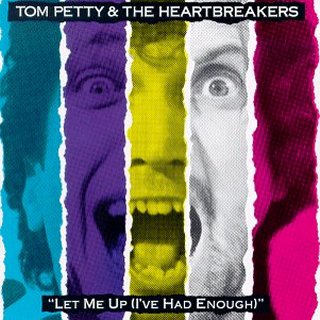
Tom Petty's blockbuster Greatest Hits CD was a neat collection of his hits from 1976 to 1993, and he had more than a few. But he has been an even more dependable album artist than hitmaker, especially now that mainstream radio has relegated him to the pop nursing home along with Paul McCartney and James Taylor. Petty has never released a bad album, a major accomplishment that often goes unnoticed. But if an album doesn't launch any hit singles, it's going to get short shrift, and one album was not represented at all by Greatest Hits.
That album was Let Me Up (I've Had Enough), an effort that failed to catch fire in 1987. The album's lead single, "Jammin' Me," made a disappointing showing (by Petty's standards), as did other singles from the record. "Jammin' Me", co-written by Petty with Bob Dylan and Heartbreakers guitarist Mike Campbell, isn't Petty's best, but it's a solid, meat-and-potatoes rocker that still sounds better than most artists on their best days.
The rest of Let Me Up (I've Had Enough) is just as strong, and usually more interesting. "Runaway Trains" is the most modern-sounding song on the album, and therefore, the most dated. But ignore the synthesizers, and it's one of the finer Petty/Campbell compositions. "It'll All Work Out" is a pretty ballad, chiming with acoustic guitars and mandolin. The rest of the album is mostly stripped-down rock, the Heartbreakers' forte, the highlights being "Think About Me," the raucous title track, and the Johnny Cash-inspired "Self Made Man."
The Heartbreakers, who produced the album themselves, were somewhat disappointed by the final product. Drummer Stan Lynch complained that many of the best tracks were left off (he has a point; check out the Playback boxed set to hear some of them). But Let Me Up (I've Had Enough) is probably the simplest and loosest album of Petty's post Southern Accents career. No concept, no orchestras, no Jeff Lynne, just Petty and co. ripping it up as only they can do. Had enough? Never.
TODAY'S RECOMMENDATION: "It'll All Work Out" by Tom Petty and the Heartbreakers
AVAILABLE ON: Let Me Up (I've Had Enough); iTunes
That album was Let Me Up (I've Had Enough), an effort that failed to catch fire in 1987. The album's lead single, "Jammin' Me," made a disappointing showing (by Petty's standards), as did other singles from the record. "Jammin' Me", co-written by Petty with Bob Dylan and Heartbreakers guitarist Mike Campbell, isn't Petty's best, but it's a solid, meat-and-potatoes rocker that still sounds better than most artists on their best days.
The rest of Let Me Up (I've Had Enough) is just as strong, and usually more interesting. "Runaway Trains" is the most modern-sounding song on the album, and therefore, the most dated. But ignore the synthesizers, and it's one of the finer Petty/Campbell compositions. "It'll All Work Out" is a pretty ballad, chiming with acoustic guitars and mandolin. The rest of the album is mostly stripped-down rock, the Heartbreakers' forte, the highlights being "Think About Me," the raucous title track, and the Johnny Cash-inspired "Self Made Man."
The Heartbreakers, who produced the album themselves, were somewhat disappointed by the final product. Drummer Stan Lynch complained that many of the best tracks were left off (he has a point; check out the Playback boxed set to hear some of them). But Let Me Up (I've Had Enough) is probably the simplest and loosest album of Petty's post Southern Accents career. No concept, no orchestras, no Jeff Lynne, just Petty and co. ripping it up as only they can do. Had enough? Never.
TODAY'S RECOMMENDATION: "It'll All Work Out" by Tom Petty and the Heartbreakers
AVAILABLE ON: Let Me Up (I've Had Enough); iTunes
Wednesday, September 24, 2008
UNDERRATED ALBUMS: He Thinks Too Much So We Don't Have To
Paul Simon's
All of this makes Hearts and Bones sound like a troubled album. If anything, it's Simon at his best. Forgotten in the wake of the blockbuster
Simon later referred to the Hearts and Bones period as the time he finally began "to understand about writing...when to use ordinary language and when to use enriched language." You can hear this poetic blend of the elevated and the conversational in the title track, now a favorite among Simon aficionados. It's the story of Paul's brief marriage to Carrie Fisher. Simon has always had a way with words, but my God, listen to this song and tell me it isn't his absolute peak as a lyricist. "The arc of a love affair," his eloquent phrase, has never been outlined with more grace or humor or profound sadness. It starts with the wedding: "The act was outrageous/The bride was contagious/She burned like a bride." The song's middle section is a dialogue between the two lovers, and Simon shows a playwright's skill in showing us, not telling us, why these two will never agree on anything. In the end, man and woman "return to their natural coasts" to recover from one other.
Hearts and Bones aches all over. "Train in the Distance" is also about a divorce, this time with children caught in the middle. But being a Paul Simon album, there's also some fussy intellectualism to go with the melodrama. "When Numbers Get Serious" equates the power of love with the certainty of mathematics. Simon is so stuck in his own head, he even wrote two-- two-- songs called "Think Too Much." Mr. Simon, it seems, has an acute sense of irony. "Think Too Much (a)" is a funky, funny look at youthful confusion. "Think Too Much (b)" is more somber, climaxing with this touching family scene: "And in the night/My father came to me/And held me to his chest/He said 'there's not much more that you can do/Go on and get some rest.'"
There's plenty of striking, lovely moments like this on Hearts and Bones. Perhaps the most effective song is "The Late Great Johnny Ace." In this musical autobiography, Paul links his childhood sadness over the death of minor rocker Johnny Ace with the much later murder of John Lennon. I wasn't alive to experience Lennon's death, but hearing Simon's take is shattering enough.
The album isn't the creamy folk-jazz of 1975's Still Crazy After All These Years, and it predates Simon's later experiments with world music and Broadway. Still, Hearts and Bones is full of little sonic surprises; some doo-wop here, a Philip Glass string arrangement there. Simon was punished on the charts for throwing so much at the wall, but most of it stuck.
TODAY'S RECOMMENDATION: "The Late Great Johnny Ace" by Paul Simon
AVAILABLE ON: Hearts and Bones; iTunes
Tuesday, September 23, 2008
UNDERRATED ALBUMS: He Was Smooth, He Was Rough, He Was More Than Enough
By the late 1980s, even Bob Dylan no longer believed in Bob Dylan. His albums had become increasingly labored and unimaginative, his live shows often descended into tuneless chaos, and he appeared withdrawn and sullen to even his closest friends. In his memoir, he remembers telling himself: "...I'm a '60s folk troubadour, a folk-rock relic, a wordsmith from bygone days, a fictitious head of state from a place nobody knows. I'm in the bottomless pit of cultural oblivion." Critics mostly agreed, giving poor marks to late '80s records like Knocked Out Loaded and Down in the Groove. Had the Spokesman of His Generation become the class clown?
Not quite. Even the disappointing Knocked Out Loaded contains some genius ("Brownsville Girl," co-written with Sam Shepard). If Bob was so down and out, how could he give that brilliant, jolting, punk rock performance on David Letterman's show? How could he surprise everyone by singing the hell out a Gershwin standard? The truth is, Bob's gift has never left him for too long. Just when he was contemplating retirement, he enjoyed a resurgence. First by participating in the Traveling Wilburys, and then with 1989's Oh Mercy, a moody return to critical favor.
Under the Red Sky, released the next year, did not share this success. One of the worst-selling albums of Bob's career, it was condemned by reviewers as a new creative low point. "The drag is that Dylan doesn't have much to say," groaned Rolling Stone, "or a really memorable way to say it." Other critics seized on the slick modern production by Don and David Was, known for their work with other geezer acts like the Rolling Stones and Bonnie Raitt. The album's apparent lack of depth, not to mention the unusual presence of guest artists, reinforced the idea that the River Bob had run dry.
I don't understand why Under the Red Sky has been so cruelly dismissed. True, Dylan would return in much sharper form with Time Out of Mind later in the decade, starting a hot streak that is still going strong. But to me, Under the Red Sky is one of Bob's most relaxed and enjoyable albums. It's silly and playful one moment ("Wiggle Wiggle"), quiet and philosophical the next ("God Knows"). "Unbelievable" rocks lean and mean, "Cat's in the Well" is a catchy blues, and "Born in Time" sports one of his most enticing melodies. When I listen to the record, I hear Bob Dylan dismantling his art to see if he can put it back together, bringing it all back home before he sets back out again.
As for the production, it is smoother than we're used to for a Dylan record, but not to its detriment. It's polished but also clean and sharp. Other producers had tried to modernize Bob by smothering him in synthesizers and canned echo (see Empire Burlesque). But the Was Brothers kept Bob's cranky croak front and center, making sure we knew who we were listening to. Dylan claims to have had little input into the record's sound, but maybe that's a good thing. It was certainly the producers' idea to have George Harrison lend his slide guitar to the title track, which alone makes the album worth its list price.
Dylan was so "completely disillusioned" by the experience he didn't record any new material for seven years, leaving the impression that Under the Red Sky almost killed his career. I disagree. I think Under the Red Sky is the sound of Bob Dylan recharging his batteries, quietly rediscovering his own creative spark and gearing up for one of rock's greatest twilight resurgences. Thank God he didn't let the sun set too early.
TODAY'S RECOMMENDATION: "Born in Time" by Bob Dylan
AVAILABLE ON: Under the Red Sky; iTunes
Not quite. Even the disappointing Knocked Out Loaded contains some genius ("Brownsville Girl," co-written with Sam Shepard). If Bob was so down and out, how could he give that brilliant, jolting, punk rock performance on David Letterman's show? How could he surprise everyone by singing the hell out a Gershwin standard? The truth is, Bob's gift has never left him for too long. Just when he was contemplating retirement, he enjoyed a resurgence. First by participating in the Traveling Wilburys, and then with 1989's Oh Mercy, a moody return to critical favor.
Under the Red Sky, released the next year, did not share this success. One of the worst-selling albums of Bob's career, it was condemned by reviewers as a new creative low point. "The drag is that Dylan doesn't have much to say," groaned Rolling Stone, "or a really memorable way to say it." Other critics seized on the slick modern production by Don and David Was, known for their work with other geezer acts like the Rolling Stones and Bonnie Raitt. The album's apparent lack of depth, not to mention the unusual presence of guest artists, reinforced the idea that the River Bob had run dry.
I don't understand why Under the Red Sky has been so cruelly dismissed. True, Dylan would return in much sharper form with Time Out of Mind later in the decade, starting a hot streak that is still going strong. But to me, Under the Red Sky is one of Bob's most relaxed and enjoyable albums. It's silly and playful one moment ("Wiggle Wiggle"), quiet and philosophical the next ("God Knows"). "Unbelievable" rocks lean and mean, "Cat's in the Well" is a catchy blues, and "Born in Time" sports one of his most enticing melodies. When I listen to the record, I hear Bob Dylan dismantling his art to see if he can put it back together, bringing it all back home before he sets back out again.
As for the production, it is smoother than we're used to for a Dylan record, but not to its detriment. It's polished but also clean and sharp. Other producers had tried to modernize Bob by smothering him in synthesizers and canned echo (see Empire Burlesque). But the Was Brothers kept Bob's cranky croak front and center, making sure we knew who we were listening to. Dylan claims to have had little input into the record's sound, but maybe that's a good thing. It was certainly the producers' idea to have George Harrison lend his slide guitar to the title track, which alone makes the album worth its list price.
Dylan was so "completely disillusioned" by the experience he didn't record any new material for seven years, leaving the impression that Under the Red Sky almost killed his career. I disagree. I think Under the Red Sky is the sound of Bob Dylan recharging his batteries, quietly rediscovering his own creative spark and gearing up for one of rock's greatest twilight resurgences. Thank God he didn't let the sun set too early.
TODAY'S RECOMMENDATION: "Born in Time" by Bob Dylan
AVAILABLE ON: Under the Red Sky; iTunes
Monday, September 22, 2008
UNDERRATED ALBUMS: Still Mightier Than Most
Music critics, myself included, are mostly full of crap. At least, that's what you say, dear reader and music lover. What do critics know? All we do is overpraise weird, unlistenable hipster bands and slam your heroes. I don't suppose you put any more faith in your fellow consumers of music. Some of the stuff America sends rocketing to the top of the charts makes me want to clean my ears out with a letter opener. It puzzles us all when others don't hear genius in all the same places we do. This week, this music snob will introduce you to some records I think have gone criminally underpraised.
The only thing consistent about Elvis Costello's music over the past thirty years has been its undimmed emotional intensity. His late '70s records burned with nerdy fury, giving us punchy new wave rock songs that were too tuneful to be called punk. "Big Tears" and "Radio Radio" seethe infectiously, sounding every bit as angry as anything out of CBGB. Over the years, Elvis opened up his sound to include country, jazz, and classical elements, to name only a few. Costello's youthful anger may have lessened, just supplemented by new, equally potent emotional outbursts. North, his ravishing collection of piano ballads, may be romantic, but it's not mellow. Listen to the words, and the former Declan MacManus has a lot of raw emotion he just can't keep inside.
1991's Mighty Like A Rose is as emotional as any record he's made. On the surface, it's a shiny piece of early '90s pop/rock, one of the slickest of Costello's career. Following in the footsteps of 1989's Spike, Mighty Like a Rose continued to shave the rough edges off of Costello's sound in the pursuit of something much more polished. Baroque touches color the album. It bursts with horns and strings and overdubbed backing vocals, banjos and sound effects and anything else that was around. But underneath this pop party atmosphere, Elvis was still pissed off and passionate, barking some of his most biting lyrics ("I am your stupid lover, you wretched ghoul.")
Critics were generally not kind. While Rolling Stone gave it a pass, if not a rave, others were quick to proclaim it as Elvis' nadir. Robert Christgau graded Mighty Like a Rose a "C+", writing, "the good songs are overblown tragedies, the bad ones overblown trifles." All Music Guide said "there's so much going on that it's hard to get to the core of the songs." The dense production, credited to Mitchell Froom and Kevin Killen, received the brunt of the criticism, though the buck always stops with the guy whose name is on the album.
These critiques aren't entirely off base. The album is needlessly cluttered and fussy. A bizarre song like "Hurry Down Doomsday (The Bugs Are Taking Over)" would benefit from a more straightforward rock arrangement. "Playboy to a Man" could have been a great Little Richard rave-up, but it ends up sounding like something from Pee Wee's Playhouse. One wonders what Mighty Like A Rose might have sounded like if it had been quick and dirty like 1986's Blood and Chocolate or 2004's The Delivery Man. 1991 saw Elvis stuck in between these career high points, drowning in overproduction.
That's the bad news from an album overflowing with good news. "So Like Candy" is the best of the dozen or so songs Costello co-wrote with Paul McCartney. The song sparkles with Costello's sardonic flair and McCartney's melodic grace. "The Other Side of Summer" parodies the Beach Boys and even mocks McCartney's old songwriting partner, but with a killer hook and dark humor John would have loved. "All Grown Up" has a melody for the ages and "Sweet Pear" sounds like a moodier partner to the Beatles' "Don't Let Me Down."
Mighty Like A Rose is at times beautiful, baffling, and frustrating. It's appropriate it should end with a song that is all those things at once. The waltzing "Couldn't Call it Unexpected No. 4" is perhaps the finest piece of music Costello has ever composed. The lyric is evocative but ultimately inscrutable ("The sudden chill where lovers doubt their immortality/As the clouds cover the sky"). Costello's performance here is a marvel, too, seamlessly alternating between delicate and gruff. But the song's strange, circus-like arrangement is a major distraction, with cheesy trumpets and plinking keyboards carrying on as if writing the best song of your career is some kind of joke.
Costello is really onto something here, most of the time, and his idiosyncratic songcraft shines through the thicket of studio gloss. This is one time Costello couldn't be saved from his own eccentricities. Without them, though, would we love him as much as we do?
TODAY'S RECOMMENDATION: "Couldn't Call it Unexpected No. 4" by Elvis Costello
AVAILABLE ON: Mighty Like A Rose; iTunes
The only thing consistent about Elvis Costello's music over the past thirty years has been its undimmed emotional intensity. His late '70s records burned with nerdy fury, giving us punchy new wave rock songs that were too tuneful to be called punk. "Big Tears" and "Radio Radio" seethe infectiously, sounding every bit as angry as anything out of CBGB. Over the years, Elvis opened up his sound to include country, jazz, and classical elements, to name only a few. Costello's youthful anger may have lessened, just supplemented by new, equally potent emotional outbursts. North, his ravishing collection of piano ballads, may be romantic, but it's not mellow. Listen to the words, and the former Declan MacManus has a lot of raw emotion he just can't keep inside.
1991's Mighty Like A Rose is as emotional as any record he's made. On the surface, it's a shiny piece of early '90s pop/rock, one of the slickest of Costello's career. Following in the footsteps of 1989's Spike, Mighty Like a Rose continued to shave the rough edges off of Costello's sound in the pursuit of something much more polished. Baroque touches color the album. It bursts with horns and strings and overdubbed backing vocals, banjos and sound effects and anything else that was around. But underneath this pop party atmosphere, Elvis was still pissed off and passionate, barking some of his most biting lyrics ("I am your stupid lover, you wretched ghoul.")
Critics were generally not kind. While Rolling Stone gave it a pass, if not a rave, others were quick to proclaim it as Elvis' nadir. Robert Christgau graded Mighty Like a Rose a "C+", writing, "the good songs are overblown tragedies, the bad ones overblown trifles." All Music Guide said "there's so much going on that it's hard to get to the core of the songs." The dense production, credited to Mitchell Froom and Kevin Killen, received the brunt of the criticism, though the buck always stops with the guy whose name is on the album.
These critiques aren't entirely off base. The album is needlessly cluttered and fussy. A bizarre song like "Hurry Down Doomsday (The Bugs Are Taking Over)" would benefit from a more straightforward rock arrangement. "Playboy to a Man" could have been a great Little Richard rave-up, but it ends up sounding like something from Pee Wee's Playhouse. One wonders what Mighty Like A Rose might have sounded like if it had been quick and dirty like 1986's Blood and Chocolate or 2004's The Delivery Man. 1991 saw Elvis stuck in between these career high points, drowning in overproduction.
That's the bad news from an album overflowing with good news. "So Like Candy" is the best of the dozen or so songs Costello co-wrote with Paul McCartney. The song sparkles with Costello's sardonic flair and McCartney's melodic grace. "The Other Side of Summer" parodies the Beach Boys and even mocks McCartney's old songwriting partner, but with a killer hook and dark humor John would have loved. "All Grown Up" has a melody for the ages and "Sweet Pear" sounds like a moodier partner to the Beatles' "Don't Let Me Down."
Mighty Like A Rose is at times beautiful, baffling, and frustrating. It's appropriate it should end with a song that is all those things at once. The waltzing "Couldn't Call it Unexpected No. 4" is perhaps the finest piece of music Costello has ever composed. The lyric is evocative but ultimately inscrutable ("The sudden chill where lovers doubt their immortality/As the clouds cover the sky"). Costello's performance here is a marvel, too, seamlessly alternating between delicate and gruff. But the song's strange, circus-like arrangement is a major distraction, with cheesy trumpets and plinking keyboards carrying on as if writing the best song of your career is some kind of joke.
Costello is really onto something here, most of the time, and his idiosyncratic songcraft shines through the thicket of studio gloss. This is one time Costello couldn't be saved from his own eccentricities. Without them, though, would we love him as much as we do?
TODAY'S RECOMMENDATION: "Couldn't Call it Unexpected No. 4" by Elvis Costello
AVAILABLE ON: Mighty Like A Rose; iTunes
Friday, September 12, 2008
TELEPHONE SONGS: Raymond Carver's Got Nothing On This Guy
Chuck Berry helped invent rock and roll, and nobody disputes this. If not for him, guitar solos as we know them might not exist. But Berry was also a gifted short story writer; songs like "The Promised Land" and "C'est La Vie (You Never Can Tell)" have a sharp narrative structure that translates well to the page.
My favorite is "Memphis." It covers the same ground as Jim Croce's "Operator" (and similarly titled songs by the Grateful Dead and the Band), but with a twist at the end. It's worth a read:
Long distance information, give me Memphis Tennessee
Help me find a party that tried to get in touch with me
She could not leave a number but I know who placed the call
'cause my uncle took a message and he wrote it on the wall
Help me, information, get in touch with my Marie
She's the only one who'd call me here from Memphis Tennessee
Her home is on the south side, high upon a ridge
Just a half a mile from the Mississippi bridge
Last time I saw Marie she was wavin' me goodbye
With "hurry-home" drops on her cheek that trickled from her eye
But we were pulled apart because her mom did not agree
And tore apart our happy home in Memphis Tennessee
Help me, information, more than that I cannot add
Only that I miss her and all the fun we had
Marie is only six years old, information please
Try to put me through to her in Memphis Tennessee
The "girl" Chuck's trying to get in touch with, whose mama doesn't approve, is actually his daughter. It's an unusually clever twist for an early rock song, and it showed the genre's lyrical potential beyond "Wop-bop-a-loo-mop alop-bam-boom." Then Berry went and blew it all with "My Ding-A-Ling." I guess great artists are unpredictable by nature.
TODAY'S RECOMMENDATION: "Memphis" by Chuck Berry
AVAILABLE ON: The Great Twenty-Eight
Thursday, September 11, 2008
TELEPHONE SONGS: Not-So-Silent Film
When I hear certain songs, my mind creates little movies to go with them. I'm sure a lot of people do this. Real music videos have made our imaginary ones redundant, though, by supplying the images for us. Older songs are better fodder for the Scorsese in all of us, but even they can be spoiled by very bad soundtrack choices. (Robert DeNiro's A Bronx Tale, which is a pretty good movie, has completely spoiled the Moody Blues for me. Rent it and find out why.) And whenever I finally see the video for a song I've been directing in my head for years, I'm always disappointed.
This happened recently with Electric Light Orchestra's "Calling America." The song is typical of late-era ELO, with its cheesy synths, corny lyrics and Jeff Lynne's famous multitracking tomfoolery. And I love it. It tells the story of a lover stranded across the pond, trying desperately to reach his girl in the States. The hook is huge, and so is the heart, and Jeff's sincerity shines through even the slick '80s pop sheen.
The video, though, is terrible. We see Jeff and two other bandmates performing in front of a hideous office building. We see shots of a mass transit train. We see a woman... walking around, for some reason. And there's some awful computer graphics of her head. Yeah. It's bad.
Here's what I always imagined: a disheveled man, wearing a suit and tie, at a pay phone. He looks frustrated. He can't get through. Soon, we see him sprinting (with the synthy beat) around London, trying but failing to catch trains, cabs, and buses. A couple more times, he stops to use a phone but gets no response. Soon, he runs into Heathrow airport, in a series of tinted Paul Thomas Anderson-esque wide shots. The camera smoothly tracks along as he runs through the terminal to buy his ticket. But he has no need, because she's there. That's why he couldn't get through: she has left America to be with him.
I'd like to know what songs turn on the filmmaker in you. If you're like some enterprising fans, you've already made your own videos, and there's no reason not to share. Okay, sometimes there is. But it can't be any worse than McG.
TODAY'S RECOMMENDATION: "Calling America" by Electric Light Orchestra
AVAILABLE ON: Balance of Power; iTunes
This happened recently with Electric Light Orchestra's "Calling America." The song is typical of late-era ELO, with its cheesy synths, corny lyrics and Jeff Lynne's famous multitracking tomfoolery. And I love it. It tells the story of a lover stranded across the pond, trying desperately to reach his girl in the States. The hook is huge, and so is the heart, and Jeff's sincerity shines through even the slick '80s pop sheen.
The video, though, is terrible. We see Jeff and two other bandmates performing in front of a hideous office building. We see shots of a mass transit train. We see a woman... walking around, for some reason. And there's some awful computer graphics of her head. Yeah. It's bad.
Here's what I always imagined: a disheveled man, wearing a suit and tie, at a pay phone. He looks frustrated. He can't get through. Soon, we see him sprinting (with the synthy beat) around London, trying but failing to catch trains, cabs, and buses. A couple more times, he stops to use a phone but gets no response. Soon, he runs into Heathrow airport, in a series of tinted Paul Thomas Anderson-esque wide shots. The camera smoothly tracks along as he runs through the terminal to buy his ticket. But he has no need, because she's there. That's why he couldn't get through: she has left America to be with him.
I'd like to know what songs turn on the filmmaker in you. If you're like some enterprising fans, you've already made your own videos, and there's no reason not to share. Okay, sometimes there is. But it can't be any worse than McG.
TODAY'S RECOMMENDATION: "Calling America" by Electric Light Orchestra
AVAILABLE ON: Balance of Power; iTunes
Wednesday, September 10, 2008
TELEPHONE SONGS: Your Mother Should Know
Who do you call when you're in need of advice? If you're lucky, you've got a mother you can always turn to for long-distance counsel. Chris Streng apparently does, or just wishes it so, because he wrote an 8-minute song about it for his band the Stratford 4.
The Stratford 4 are a band from San Francisco I stumbled onto while attending college there. A perpetually stoned dorm roommate recommended them to me, and I picked up their Love & Distortion CD on one of many trips to Amoeba Records on Haight street. Their name had me expecting something vaguely Shakespearean. Instead, I heard dense, sleepy psychedelia, with droning guitars and Streng's dispassionate vocals. The album's sometimes lugibrious pace took some getting used to, but from out of the fuzz and echo, some songs started to stick with me. "Telephone" is one of the best.
It's certainly the funniest. In it, Streng asks his mom just what the hell went wrong with his life. "When I was 22/I was a lot like you," she replies. After Chris rattles off the gloomy indie bands he's been indulging in, Mom has one last bit of sage counsel: "Don't forget Bob Dylan, and don't forget the Stones/And don't spend Saturday night all alone." Whether this is an accurate portrayal of Streng's mother or just a rock geek's fantasy is a matter of conjecture, but I can tell you that's some damn good advice.
TODAY'S RECOMMENDATION: "Telephone" by the Stratford 4
AVAILABLE ON: Love & Distortion
The Stratford 4 are a band from San Francisco I stumbled onto while attending college there. A perpetually stoned dorm roommate recommended them to me, and I picked up their Love & Distortion CD on one of many trips to Amoeba Records on Haight street. Their name had me expecting something vaguely Shakespearean. Instead, I heard dense, sleepy psychedelia, with droning guitars and Streng's dispassionate vocals. The album's sometimes lugibrious pace took some getting used to, but from out of the fuzz and echo, some songs started to stick with me. "Telephone" is one of the best.
It's certainly the funniest. In it, Streng asks his mom just what the hell went wrong with his life. "When I was 22/I was a lot like you," she replies. After Chris rattles off the gloomy indie bands he's been indulging in, Mom has one last bit of sage counsel: "Don't forget Bob Dylan, and don't forget the Stones/And don't spend Saturday night all alone." Whether this is an accurate portrayal of Streng's mother or just a rock geek's fantasy is a matter of conjecture, but I can tell you that's some damn good advice.
TODAY'S RECOMMENDATION: "Telephone" by the Stratford 4
AVAILABLE ON: Love & Distortion
Tuesday, September 9, 2008
TELEPHONE SONGS: The Last of the Great Moustaches
The singer/songwriter movement of the late '60s and '70s was surely a product of the folk music boom from several years earlier. But it's also helpful to remember that the baby boomers appearing on the music scene at the time were the first generation to grow up listening to rock and roll. If Joni Mitchell was such a touchy-feely folkie, what inspired her to write a funky rocker like"Raised on Robbery"? Before that, the Byrds ran a few volts of electricity through Pete Seeger. This fusion of coffeehouse navel-gazing and juke joint swing also explains the beguiling, timeless music of Jim Croce.
Croce, like Elvis Presley before him, was a singin' truckdriver who caught a break. After a few aborted attempts at a music career, Croce signed with ABC records in 1972. He died in a plane crash the following year, but not before recording classics like "Bad Bad Leroy Brown," "Time in a Bottle," and "Operator (That's Not the Way it Feels)".
It's the latter song that fits our topic this week. "Operator" is narrated by a guy who's lost his girl to his "best old ex friend," but who wants to call just to tell them he's no longer hurt (though he clearly is). He's presumably already told this story to the local bartender, who tired of it and sent the poor sap home. Basically, Jim Croce wrote the first great song about drunk-dialing. Imagine how hard it must have been back then, with the rotary phones. I can barely use one of those things sober.
Croce's often praised for his intricate acoustic guitar playing, though that was mostly the work of Maury Muehleisen. Muehleisen and Croce were a duo in all but name, with Maury's lead guitar propelling songs like "Rapid Roy (The Stock Car Boy)" and "Workin' at the Carwash Blues." Muehleisen's playing on "Operator" is especially fine. It's a good match for Croce's voice: tender, but strong, and not so pretty that you don't hear the hurt. Their partnership ended when both men died in the crash.
What would Croce be doing now if he had lived? Impossible to say. He might have escaped into a happy retirement like Bill Withers, or weathered the God-awful 1980s only to return strong in the '90s, like James Taylor. His music had the same warmth as theirs, and the same lack of depth that has kept critical praise at a distance. But you can't fake feelings that well, and Jim Croce clearly felt these songs. Spend some time with them, and you will too.
TODAY'S RECOMMENDATION: "Operator (That's Not the Way it Feels)" by Jim Croce
AVAILABLE ON: You Don't Mess Around with Jim; iTunes
Croce, like Elvis Presley before him, was a singin' truckdriver who caught a break. After a few aborted attempts at a music career, Croce signed with ABC records in 1972. He died in a plane crash the following year, but not before recording classics like "Bad Bad Leroy Brown," "Time in a Bottle," and "Operator (That's Not the Way it Feels)".
It's the latter song that fits our topic this week. "Operator" is narrated by a guy who's lost his girl to his "best old ex friend," but who wants to call just to tell them he's no longer hurt (though he clearly is). He's presumably already told this story to the local bartender, who tired of it and sent the poor sap home. Basically, Jim Croce wrote the first great song about drunk-dialing. Imagine how hard it must have been back then, with the rotary phones. I can barely use one of those things sober.
Croce's often praised for his intricate acoustic guitar playing, though that was mostly the work of Maury Muehleisen. Muehleisen and Croce were a duo in all but name, with Maury's lead guitar propelling songs like "Rapid Roy (The Stock Car Boy)" and "Workin' at the Carwash Blues." Muehleisen's playing on "Operator" is especially fine. It's a good match for Croce's voice: tender, but strong, and not so pretty that you don't hear the hurt. Their partnership ended when both men died in the crash.
What would Croce be doing now if he had lived? Impossible to say. He might have escaped into a happy retirement like Bill Withers, or weathered the God-awful 1980s only to return strong in the '90s, like James Taylor. His music had the same warmth as theirs, and the same lack of depth that has kept critical praise at a distance. But you can't fake feelings that well, and Jim Croce clearly felt these songs. Spend some time with them, and you will too.
TODAY'S RECOMMENDATION: "Operator (That's Not the Way it Feels)" by Jim Croce
AVAILABLE ON: You Don't Mess Around with Jim; iTunes
Monday, September 8, 2008
TELEPHONE SONGS: Son of a Son
Alexander Graham Bell's invention of the telephone in 1876 was a huge leap forward for passive-aggressiveness. The first words spoken over the device were to his assistant: "Mr. Watson, come here. I want to see you." Bell might as well have added, "If it's not too much trouble. You're only my assistant, for Christ's sake." Soon people were using the telephone to end relationships and spread rumors without having to look another person in the eye. The phone became such a staple of human communication it became a frequent topic for songwriters. This week we'll discuss some of the finest odes to telecommunication.
They say you have to pay your dues if you want to sing the blues, advice Son Seals took to heart. In his 62 years, Seals was shot, robbed, lost a leg to diabetes, and saw his home destroyed by fire. Seals was always well-regarded in the blues community, winning awards and the praise of his peers, but he never had that big commercial breakthrough. He died in 2004.
I have to admit, I only became familiar with Seals' music recently, and when I first heard him, I thought he was B.B. King. His stinging guitar and gritty, powerful voice may not have been entirely distinctive, but he was a gifted musician and songwriter. The son of a bluesman, also somehow nicknamed "Son," Son II started out as a drummer, even touring with Albert King. But as a guitarist and bandleader he could really strut his stuff.
"Telephone Angel" is the song that led me to Son Seals. In it, Son sings of the sheer delight of contacting a sweetheart via the telephone wires. It does what the best blues music can do, speaking universal truths with plainspoken eloquence, lacing familiar chord progressions with improvisational spice, and sounding both fresh and age-old. Released in 1976, it came a full century after Bell spoke his famous words to Watson. Seals didn't have orders to give, though, just joy to share.
TODAY'S RECOMMENDATION: "Telephone Song" by Son Seals
AVAILABLE ON: Midnight Son; iTunes
They say you have to pay your dues if you want to sing the blues, advice Son Seals took to heart. In his 62 years, Seals was shot, robbed, lost a leg to diabetes, and saw his home destroyed by fire. Seals was always well-regarded in the blues community, winning awards and the praise of his peers, but he never had that big commercial breakthrough. He died in 2004.
I have to admit, I only became familiar with Seals' music recently, and when I first heard him, I thought he was B.B. King. His stinging guitar and gritty, powerful voice may not have been entirely distinctive, but he was a gifted musician and songwriter. The son of a bluesman, also somehow nicknamed "Son," Son II started out as a drummer, even touring with Albert King. But as a guitarist and bandleader he could really strut his stuff.
"Telephone Angel" is the song that led me to Son Seals. In it, Son sings of the sheer delight of contacting a sweetheart via the telephone wires. It does what the best blues music can do, speaking universal truths with plainspoken eloquence, lacing familiar chord progressions with improvisational spice, and sounding both fresh and age-old. Released in 1976, it came a full century after Bell spoke his famous words to Watson. Seals didn't have orders to give, though, just joy to share.
TODAY'S RECOMMENDATION: "Telephone Song" by Son Seals
AVAILABLE ON: Midnight Son; iTunes
Friday, August 29, 2008
SOUNDS OF SUMMER: Have a Drink, Have a Drive, But Not in That Order
I had a friend who thought Steely Dan was a person. For his sake, let's do a quick review: Steely Dan is a group, but Eagle-Eye Cherry is a man. Franz Ferdinand and Jethro Tull were people, but they have bands named after them. And Mungo Jerry? A band. Sort of.
Mungo Jerry is the band fronted by English singer/songwriter Ray Dorset. He named his group after Mungojerrie, one of the T.S. Eliot characters later brought to screeching life in the musical Cats. Dorset is the only perennial member of Mungo Jerry, and the author of their most enduring hit, "In the Summertime." Actually, it's their only enduring hit, though they placed several other songs on the charts back in the '70s.
"In the Summertime" has a special place in the Annoying Songs You Can't Help But Like Hall of Fame, along with "Suite: Judy Blue Eyes" and "Rockin' Pneumonia and the Boogie Woogie Flu." If the shuffling jugband rhythm doesn't get you, the killer ragtime piano will. But when your toe stops tapping, you'll have to wonder, what kind of music is this? Nothing recorded after 1930 can really be called ragtime, and it's too slow (and piano-heavy) to be skiffle. It's just a delightful pop anomaly, one that sold over 23 million copies and dominated radio in the summer of 1970.
Dorset's had a varied career, collaborating with people like blues rocker Peter Green and writing songs for other artists, as well as for films and television. But he's best known as the folksy, hiccuping voice of Mungo Jerry, enticing us to stretch right up and touch the sky. Bob Dylan and Roger Miller, no slouches where songwriting is concerned, have also written songs called "In the Summertime." Ray Dorset's is better. If I were him, I would put that on a plaque.
TODAY'S RECOMMENDATION: "In the Summertime" by Mungo Jerry
AVAILABLE ON: In the Summertime; iTunes
Mungo Jerry is the band fronted by English singer/songwriter Ray Dorset. He named his group after Mungojerrie, one of the T.S. Eliot characters later brought to screeching life in the musical Cats. Dorset is the only perennial member of Mungo Jerry, and the author of their most enduring hit, "In the Summertime." Actually, it's their only enduring hit, though they placed several other songs on the charts back in the '70s.
"In the Summertime" has a special place in the Annoying Songs You Can't Help But Like Hall of Fame, along with "Suite: Judy Blue Eyes" and "Rockin' Pneumonia and the Boogie Woogie Flu." If the shuffling jugband rhythm doesn't get you, the killer ragtime piano will. But when your toe stops tapping, you'll have to wonder, what kind of music is this? Nothing recorded after 1930 can really be called ragtime, and it's too slow (and piano-heavy) to be skiffle. It's just a delightful pop anomaly, one that sold over 23 million copies and dominated radio in the summer of 1970.
Dorset's had a varied career, collaborating with people like blues rocker Peter Green and writing songs for other artists, as well as for films and television. But he's best known as the folksy, hiccuping voice of Mungo Jerry, enticing us to stretch right up and touch the sky. Bob Dylan and Roger Miller, no slouches where songwriting is concerned, have also written songs called "In the Summertime." Ray Dorset's is better. If I were him, I would put that on a plaque.
TODAY'S RECOMMENDATION: "In the Summertime" by Mungo Jerry
AVAILABLE ON: In the Summertime; iTunes
Thursday, August 28, 2008
SOUNDS OF SUMMER: Even Surfers Get the Blues
The weekly theme format is my own beastly creation, and I am at its mercy. I always knew certain bands and artists, namely my favorites, would show up more frequently than, say, Tiny Tim. (Ukulele week is something I'm saving for when I'm really out of ideas.) I do try to mix it up a little, but hey, if the theme makes a demand, I have to comply. I actually skipped over the Beach Boys during Brothers in Arms Week just because I wanted to give some other bands a chance. But there's no way the Boys are going to sit this one out, as they are the undisputed Kings of Summer.
In fact, it was Endless Summer, a 1974 hits collection, that returned the Beach Boys to the hit parade after a long absence. It climbed the charts again during the summers of 1975 and 1976, establishing Brian Wilson and company as America's hot weather band of choice. It's a pristine 21-song ode to youth, cars and sunshine. With all this fun to be had, it's not surprising that the most underrated song is also the saddest.
"The Warmth of the Sun" aches with unrequited love. Mike Love's lyrics put it simply:
The love of my life
She left me one day
I cried when she said
"I don't feel the same way"
Still I have the warmth of the sun
Within me tonight
Love and Brian Wilson composed the song the day of John F. Kennedy's assassination. Brian has suggested a connection between the romantic loss of the lyrics and the nation's loss that day in 1963. Brian's lead vocal, one of his most tender, foreshadows the deeply personal tone of the band's 1966 masterpiece, Pet Sounds.
The song first appeared on 1964's Shut Down: Volume 2. It was a time when the band was smack dab in between their early Chuck Berry knockoffs and their lush mid-'60s peak. Though songs like "The Warmth of the Sun" hint at a growing melodic complexity, Capitol Records still hyped their act as surfing, drag racing boys of summer. The original LP's outer sleeve reads, "The Beach Boys blazed to national championship in the hot rod song field... Pull up a bucket seat and aim an ear at The Beach Boys and SHUT DOWN, VOL. II!" Musically, they were maturing, but it would take a couple more years for their image to catch up.
As a result, the album feels oddly lopsided. Side 2 begins with the frivolous "Fun Fun Fun," immediately followed by the teen heartbreak of "Don't Worry Baby." The side ends with the jarring combination of "The Warmth of the Sun," their most pensive and deeply felt ballad up to that point, and the lazy, juvenile "This Car of Mine."
Soon afterwards, the Beach Boys would abandon songs about cars in favor of romance and introspection, then psychedelia, then self-parody. They went through a lot of phases in their long career, but summer was a topic they always returned to. Of all their songs, though, only "The Warmth of the Sun" eloquently explains just why we need to keep a little summer in our hearts all year round.
TODAY'S RECOMMENDATION: "The Warmth of the Sun" by the Beach Boys
AVAILABLE ON: Shut Down- Volume 2; iTunes
In fact, it was Endless Summer, a 1974 hits collection, that returned the Beach Boys to the hit parade after a long absence. It climbed the charts again during the summers of 1975 and 1976, establishing Brian Wilson and company as America's hot weather band of choice. It's a pristine 21-song ode to youth, cars and sunshine. With all this fun to be had, it's not surprising that the most underrated song is also the saddest.
"The Warmth of the Sun" aches with unrequited love. Mike Love's lyrics put it simply:
The love of my life
She left me one day
I cried when she said
"I don't feel the same way"
Still I have the warmth of the sun
Within me tonight
Love and Brian Wilson composed the song the day of John F. Kennedy's assassination. Brian has suggested a connection between the romantic loss of the lyrics and the nation's loss that day in 1963. Brian's lead vocal, one of his most tender, foreshadows the deeply personal tone of the band's 1966 masterpiece, Pet Sounds.
The song first appeared on 1964's Shut Down: Volume 2. It was a time when the band was smack dab in between their early Chuck Berry knockoffs and their lush mid-'60s peak. Though songs like "The Warmth of the Sun" hint at a growing melodic complexity, Capitol Records still hyped their act as surfing, drag racing boys of summer. The original LP's outer sleeve reads, "The Beach Boys blazed to national championship in the hot rod song field... Pull up a bucket seat and aim an ear at The Beach Boys and SHUT DOWN, VOL. II!" Musically, they were maturing, but it would take a couple more years for their image to catch up.
As a result, the album feels oddly lopsided. Side 2 begins with the frivolous "Fun Fun Fun," immediately followed by the teen heartbreak of "Don't Worry Baby." The side ends with the jarring combination of "The Warmth of the Sun," their most pensive and deeply felt ballad up to that point, and the lazy, juvenile "This Car of Mine."
Soon afterwards, the Beach Boys would abandon songs about cars in favor of romance and introspection, then psychedelia, then self-parody. They went through a lot of phases in their long career, but summer was a topic they always returned to. Of all their songs, though, only "The Warmth of the Sun" eloquently explains just why we need to keep a little summer in our hearts all year round.
TODAY'S RECOMMENDATION: "The Warmth of the Sun" by the Beach Boys
AVAILABLE ON: Shut Down- Volume 2; iTunes
Wednesday, August 27, 2008
SOUNDS OF SUMMER: Sand and Key Changes in Unexpected Places
With summer dwindling, our beach days are numbered. Luckily, some songs can evoke summer year round. Sometimes this mental connection is created by the media. Summer songs, like Christmas songs, are seasonal because television commercials tell us they are seasonal, and we'd better get used to hearing them only a couple of months out of the year. Personally, I wouldn't mind listening to "What Are You Doing New Year's Eve?" or the Eagles doing "Please Come Home for Christmas" during all twelve months, but so be it. Same goes for summer. "Under the Boardwalk," by the Drifters, is a beautiful song even when the sun isn't shining outside.
"Under the Boardwalk," written by Kenny Young and Arthur Resnick, hit the charts in 1964. The group that recorded the song wasn't the original Drifters led by the great Clyde McPhatter, or the following group featuring Ben E. King. The Drifters of 1964, only one of dozens of lineups over the decades, were led by the voice of Johnny Moore. Moore sang the song only because lead singer Rudy Lewis died of a drug overdose the night before the session. By then, though, the Drifters were used to last-minute staff issues, and Moore sang the song as if he'd been singing it all his life.
It really is a great vocal, with Moore's voice smoothly navigating the longing high notes. In many ways, the song is typical of early '60s r&b, with its swooping strings and thinly veiled sexuality (they don't say what kind of fun they'll be havin', and don't need to.) The song is unique, though, for two reasons: first, "Under the Boardwalk" takes the unusual step of moving to a minor key for the chorus, then back to major for the verses. Also, it's driven by the distinctly Latin sound of the guiro. The instrument, a sort of wooden scraper, later surfaced in the Rolling Stones' "Gimme Shelter" and Nick Cave's "Red Right Hand," but in 1964 it was rare in an American pop record.
Here's a good game: make your own guiro at home and see if you can follow along with the recording. It's a hell of a lot more fun than air guitar, and you get to hit stuff. I can't believe nobody ever comes to my parties.
TODAY'S RECOMMENDATION: "Under the Boardwalk" by the Drifters
AVAILABLE ON: The Drifters- All Time Greatest Hits; iTunes
"Under the Boardwalk," written by Kenny Young and Arthur Resnick, hit the charts in 1964. The group that recorded the song wasn't the original Drifters led by the great Clyde McPhatter, or the following group featuring Ben E. King. The Drifters of 1964, only one of dozens of lineups over the decades, were led by the voice of Johnny Moore. Moore sang the song only because lead singer Rudy Lewis died of a drug overdose the night before the session. By then, though, the Drifters were used to last-minute staff issues, and Moore sang the song as if he'd been singing it all his life.
It really is a great vocal, with Moore's voice smoothly navigating the longing high notes. In many ways, the song is typical of early '60s r&b, with its swooping strings and thinly veiled sexuality (they don't say what kind of fun they'll be havin', and don't need to.) The song is unique, though, for two reasons: first, "Under the Boardwalk" takes the unusual step of moving to a minor key for the chorus, then back to major for the verses. Also, it's driven by the distinctly Latin sound of the guiro. The instrument, a sort of wooden scraper, later surfaced in the Rolling Stones' "Gimme Shelter" and Nick Cave's "Red Right Hand," but in 1964 it was rare in an American pop record.
Here's a good game: make your own guiro at home and see if you can follow along with the recording. It's a hell of a lot more fun than air guitar, and you get to hit stuff. I can't believe nobody ever comes to my parties.
TODAY'S RECOMMENDATION: "Under the Boardwalk" by the Drifters
AVAILABLE ON: The Drifters- All Time Greatest Hits; iTunes
Tuesday, August 26, 2008
SOUNDS OF SUMMER: Wind in Our Hair, Water in Our Shoes
When I was a kid, my family would often rent a houseboat on northern California's Lake Shasta. We'd spend a week during the summer cruising, fishing, swimming and hiking. It was the only time in my childhood I felt at all like Huck Finn, and every kid should get to do that at least once. As memorable as our lovely surroundings, though, was the music, and we always had the perfect boating soundtrack. My uncle Brent was probably the most canny family DJ, but my parents were usually in charge of making sure there was at least one Jimmy Buffett tape hanging around.
Jimmy Buffett. The guy's made a name for himself as America's great beach bum troubadour, but this image is rife with contradictions. First, he's originally from Alabama, though he eventually relocated to Florida. He may sing about his days as a young shoplifting mastermind, but he's a canny businessman with two restaurant chains. He seems like a chill guy, but infringe on his copyright and he'll sue your ass. And how can it be that the author of "Margaritaville," the theme song of mellow beach dwellers everywhere, once got ejected from an NBA game for using foul language?
Maybe he's just complex. His music isn't, though, which is part of its charm. Even before "Margaritaville" hit it big in 1977, Buffett had created and mastered the "gulf and western" sound that would define him. His classic third LP, A White Sport Coat and a Pink Crustacean, is the best introduction. It's funny, it's catchy, it's mellow, and it's better if you'd had a few mojitos. Not sure if a steel guitar and a steel drum can coexist peacefully? Then you're not a Parrothead.
My favorite was always "Lovely Cruise." It sounds like Dean Martin singing a Willie Nelson song, only better. It's got some nice, lazy acoustic guitar, gentle harmonica, and some of the sweetest electric piano you'll ever hear. The first thousand times I heard it, I wasn't even old enough to get drunk while listening to it. This has since been corrected.
TODAY'S RECOMMENDATION: "Lovely Cruise" by Jimmy Buffett
AVAILABLE ON: Changes in Latitudes, Changes in Attitudes; iTunes
Jimmy Buffett. The guy's made a name for himself as America's great beach bum troubadour, but this image is rife with contradictions. First, he's originally from Alabama, though he eventually relocated to Florida. He may sing about his days as a young shoplifting mastermind, but he's a canny businessman with two restaurant chains. He seems like a chill guy, but infringe on his copyright and he'll sue your ass. And how can it be that the author of "Margaritaville," the theme song of mellow beach dwellers everywhere, once got ejected from an NBA game for using foul language?
Maybe he's just complex. His music isn't, though, which is part of its charm. Even before "Margaritaville" hit it big in 1977, Buffett had created and mastered the "gulf and western" sound that would define him. His classic third LP, A White Sport Coat and a Pink Crustacean, is the best introduction. It's funny, it's catchy, it's mellow, and it's better if you'd had a few mojitos. Not sure if a steel guitar and a steel drum can coexist peacefully? Then you're not a Parrothead.
My favorite was always "Lovely Cruise." It sounds like Dean Martin singing a Willie Nelson song, only better. It's got some nice, lazy acoustic guitar, gentle harmonica, and some of the sweetest electric piano you'll ever hear. The first thousand times I heard it, I wasn't even old enough to get drunk while listening to it. This has since been corrected.
TODAY'S RECOMMENDATION: "Lovely Cruise" by Jimmy Buffett
AVAILABLE ON: Changes in Latitudes, Changes in Attitudes; iTunes
Monday, August 25, 2008
SOUNDS OF SUMMER: Sing a Simple Song
Why isn't Sly Stone a more celebrated figure? Maybe because he's been unwilling or unable to keep his name out there. He hasn't released an album in 25 years, and apart from the occasional odd cameo, he doesn't perform live. He didn't even have the common sense to flame out memorably; starting in the early '70s, Sly just slowly receded into drug-addled seclusion, where he remains. No blockbuster reunion tours, no comeback albums, no piggybacking collaboration with admiring young hip-hop stars. Like the old soldier of funk that he is, he just faded away.
I almost forgot: this week's topic is summer. With Labor Day approaching, this summer has just about faded away, too, but it's not too late to put on your favorite hot weather tunes. (And to answer your first question right away, no, DJ Jazzy Jeff and the Fresh Prince will not be on the list.) What constitutes a summer song? Some reference the season lyrically. Some just have that carefree summertime vibe. Some, like Sheryl Crow's "Soak up the Sun," are automatically disqualified for trying too hard.
Sly and the Family Stone's "Hot Fun in the Summertime" doesn't try too hard, one reason it's so effective. From the rhythmic piano intro, you're hooked. So infectious is the song's funky bounce you won't notice the complex interplay of horns and strings on the first few listens. The lyrics are simple but evocative, making you instantly nostalgic for those summer days, getting high high high at the county fair.
"Hot Fun in the Summertime" debuted in August of 1969, around the time of the band's celebrated performance at Woodstock. Funny how when you think of the summer of '69 (make your own Bryan Adams joke), you don't think of the fresh, soulful sounds of Sly Stone. You think of acid-soaked jams and lily-white country rock. Those things are fine, but they've completely overtaken our perception of the era. 1969 also saw James Brown getting funkier and angrier, Johnny Cash's At Folsom Prison, and Bob Marley's debut. And on the charts, Sly and Family Stone reigned.
They actually were a family. Sylvester Stewart and his brother Freddie, along with sisters Rose and Vet, all changed their name to Stone. They formed in Vallejo, eventually adding members from elsewhere in the San Francisco bay area. Before Sly's meltdown, they made pop music history by blurring the lines between rock, soul, and pop. They were also an integrated band when that was still a novelty, playing to an unusually diverse audience.
Some claim the song to be a commentary on the race riots of the late '60s. Sly did have a social conscience, but I think that's like claiming "How Much is That Doggy in the Window?" is a clever dig at capitalism. Not everything from the '60s must reek of politics. Even Sly Stone liked to chill out every now and then.
TODAY'S RECOMMENDATION: "Hot Fun in the Summertime" by Sly and the Family Stone
AVAILABLE ON: Greatest Hits; iTunes
I almost forgot: this week's topic is summer. With Labor Day approaching, this summer has just about faded away, too, but it's not too late to put on your favorite hot weather tunes. (And to answer your first question right away, no, DJ Jazzy Jeff and the Fresh Prince will not be on the list.) What constitutes a summer song? Some reference the season lyrically. Some just have that carefree summertime vibe. Some, like Sheryl Crow's "Soak up the Sun," are automatically disqualified for trying too hard.
Sly and the Family Stone's "Hot Fun in the Summertime" doesn't try too hard, one reason it's so effective. From the rhythmic piano intro, you're hooked. So infectious is the song's funky bounce you won't notice the complex interplay of horns and strings on the first few listens. The lyrics are simple but evocative, making you instantly nostalgic for those summer days, getting high high high at the county fair.
"Hot Fun in the Summertime" debuted in August of 1969, around the time of the band's celebrated performance at Woodstock. Funny how when you think of the summer of '69 (make your own Bryan Adams joke), you don't think of the fresh, soulful sounds of Sly Stone. You think of acid-soaked jams and lily-white country rock. Those things are fine, but they've completely overtaken our perception of the era. 1969 also saw James Brown getting funkier and angrier, Johnny Cash's At Folsom Prison, and Bob Marley's debut. And on the charts, Sly and Family Stone reigned.
They actually were a family. Sylvester Stewart and his brother Freddie, along with sisters Rose and Vet, all changed their name to Stone. They formed in Vallejo, eventually adding members from elsewhere in the San Francisco bay area. Before Sly's meltdown, they made pop music history by blurring the lines between rock, soul, and pop. They were also an integrated band when that was still a novelty, playing to an unusually diverse audience.
Some claim the song to be a commentary on the race riots of the late '60s. Sly did have a social conscience, but I think that's like claiming "How Much is That Doggy in the Window?" is a clever dig at capitalism. Not everything from the '60s must reek of politics. Even Sly Stone liked to chill out every now and then.
TODAY'S RECOMMENDATION: "Hot Fun in the Summertime" by Sly and the Family Stone
AVAILABLE ON: Greatest Hits; iTunes
Friday, August 15, 2008
BROTHERS IN ARMS: Dynamite
Here we've come to the end of Brothers in Arms Week, and I'm torn. So many great bands feature brothers, it's hard to pick just five. It's tempting to write another Beach Boys post, but let's give them a rest for a while. Kings of Leon have three brothers too, the Followills, but they frighten me. Same for the Black Crowes. And the Allman Brothers weren't even my favorite members of the Allman Brothers Band. So basically, for today, it was down to Hanson and AC/DC. Guess who won.
Australia's Angus and Malcolm Young have been rocking together as AC/DC for thirty-five years. Like Van Halen, their sidemen and frontmen have come and gone, but these guys just keep on spreading the good word. Only they lost their original lead singer not to artistic differences but to alcohol poisoning. Bon Scott's 1980 death was labeled "death by misadventure," which makes it sound like he was killed trying to climb a tree or chasing a leprechaun.
His replacement, the prodigiously phlegmy Brian Johnson, picked up right where Scott left off and gave voice to the band's biggest hit, "Back in Black." Johnson still sings with the group, and they plan to release a new album later this year. Fans know what to expect, as AC/DC have never done anything other than what they do best: riff-based, no-frills rock and roll.
AC/DC (I am spelling their name incorrectly only because my keyboard does not have a lightning bolt) were a lean, mean rock band, a rarity in the 1980s. Listen to "Back in Black" again: there's not a single wasted note. Drummer Phil Rudd does little but pound out a backbeat, the bass pulsing along. The guitar solo is fast but clean, concise, almost elegant. Bands like Guns 'n' Roses didn't seem to grasp this Less is More approach, but let's not get into the things the guys from Guns 'n' Roses don't grasp.
TODAY'S RECOMMENDATION: "It's a Long Way to the Top (If You Want to Rock and Roll)" by AC/DC
AVAILABLE ON: T.N.T.; iTunes
NOTE: I decided to mock Hanson instead of the more timely Jonas Brothers for a reason. I can't say I really dig those Jonas boys, yet, but I think I could. Let's see what puberty does to them. I remember writing off John Mayer a few years ago, and then he inexplicably got awesome, so I'm trying to be fair to the kids. Hanson's had a decade to impress me and they, as of this writing, still suck.
Australia's Angus and Malcolm Young have been rocking together as AC/DC for thirty-five years. Like Van Halen, their sidemen and frontmen have come and gone, but these guys just keep on spreading the good word. Only they lost their original lead singer not to artistic differences but to alcohol poisoning. Bon Scott's 1980 death was labeled "death by misadventure," which makes it sound like he was killed trying to climb a tree or chasing a leprechaun.
His replacement, the prodigiously phlegmy Brian Johnson, picked up right where Scott left off and gave voice to the band's biggest hit, "Back in Black." Johnson still sings with the group, and they plan to release a new album later this year. Fans know what to expect, as AC/DC have never done anything other than what they do best: riff-based, no-frills rock and roll.
AC/DC (I am spelling their name incorrectly only because my keyboard does not have a lightning bolt) were a lean, mean rock band, a rarity in the 1980s. Listen to "Back in Black" again: there's not a single wasted note. Drummer Phil Rudd does little but pound out a backbeat, the bass pulsing along. The guitar solo is fast but clean, concise, almost elegant. Bands like Guns 'n' Roses didn't seem to grasp this Less is More approach, but let's not get into the things the guys from Guns 'n' Roses don't grasp.
TODAY'S RECOMMENDATION: "It's a Long Way to the Top (If You Want to Rock and Roll)" by AC/DC
AVAILABLE ON: T.N.T.; iTunes
NOTE: I decided to mock Hanson instead of the more timely Jonas Brothers for a reason. I can't say I really dig those Jonas boys, yet, but I think I could. Let's see what puberty does to them. I remember writing off John Mayer a few years ago, and then he inexplicably got awesome, so I'm trying to be fair to the kids. Hanson's had a decade to impress me and they, as of this writing, still suck.
Thursday, August 14, 2008
BROTHERS IN ARMS: You're Fired. "Right Now."
With all the drama over Van Halen's revolving door of lead vocalists, it's easy to forget the band actually has a couple of guys named Van Halen in it. Actually, now there are three: Alex Van Halen, brother Eddie Van Halen, and Eddie's son Wolfgang just joined David Lee Roth for a hugely successful tour, with an album possibly to follow. Unlike most of the families we've talked about this week, the Van Halen clan is more united than ever. Their relationships with their singers, however, have been a little rockier.
The band's classic lineup featured Eddie on guitar and Alex on drums, plus Roth and bassist Michael Anthony. This quartet, the "real" Van Halen, became one of the biggest bands in the world. From 1978 to 1985, they made hard rock history with "Ain't Talkin' Bout Love," "Jamie's Cryin'," and "Runnin' With the Devil." The band's sound was heavy but hooky, earth-shaking but radio-friendly, with Eddie's frenetic fingertapping and Roth's flamboyant antics as instantly recognizable hallmarks.
I'll skip to the turmoil that followed: Roth left, to be replaced by the more tasteful but less fun Sammy Hagar. Hagar either left or was fired a decade later (nobody seems to agree), Roth rejoined for about a day, then Gary Cherone signed on, then Hagar again, then Roth again. For the latest tour, the Van Halens fired Michael Anthony and replaced him with 16-year-old Wolfgang.
What's more interesting to me than Van Halen's human resources issues is their influence. Van Halen is a great band that had a terrible effect on rock music. They did something very, very well, which inspired a lot of other bands to do the same thing badly. Eddie's guitar squeals, the fat keyboard riffs, Roth's lovable stupidity; all of these things were fine and dandy when done by VH, but pretty soon, we had to endure Motley Crue and Def Leppard. The hair just kept getting bigger, the lyrics kept getting dumber, and the '80s quickly became the worst decade for rock and roll so far. I can't think of another band that cast such a damaging shadow while actually making good music themselves.
But every silver lining has its cloud. Van Halen have sold over 80 million records, and not just to the people you'd think. Deep down, we all like our rock and roll a little stupid sometimes.
TODAY'S RECOMMENDATION: "Beautiful Girls" by Van Halen
AVAILABLE ON: Van Halen II; iTunes
The band's classic lineup featured Eddie on guitar and Alex on drums, plus Roth and bassist Michael Anthony. This quartet, the "real" Van Halen, became one of the biggest bands in the world. From 1978 to 1985, they made hard rock history with "Ain't Talkin' Bout Love," "Jamie's Cryin'," and "Runnin' With the Devil." The band's sound was heavy but hooky, earth-shaking but radio-friendly, with Eddie's frenetic fingertapping and Roth's flamboyant antics as instantly recognizable hallmarks.
I'll skip to the turmoil that followed: Roth left, to be replaced by the more tasteful but less fun Sammy Hagar. Hagar either left or was fired a decade later (nobody seems to agree), Roth rejoined for about a day, then Gary Cherone signed on, then Hagar again, then Roth again. For the latest tour, the Van Halens fired Michael Anthony and replaced him with 16-year-old Wolfgang.
What's more interesting to me than Van Halen's human resources issues is their influence. Van Halen is a great band that had a terrible effect on rock music. They did something very, very well, which inspired a lot of other bands to do the same thing badly. Eddie's guitar squeals, the fat keyboard riffs, Roth's lovable stupidity; all of these things were fine and dandy when done by VH, but pretty soon, we had to endure Motley Crue and Def Leppard. The hair just kept getting bigger, the lyrics kept getting dumber, and the '80s quickly became the worst decade for rock and roll so far. I can't think of another band that cast such a damaging shadow while actually making good music themselves.
But every silver lining has its cloud. Van Halen have sold over 80 million records, and not just to the people you'd think. Deep down, we all like our rock and roll a little stupid sometimes.
TODAY'S RECOMMENDATION: "Beautiful Girls" by Van Halen
AVAILABLE ON: Van Halen II; iTunes
Wednesday, August 13, 2008
BROTHERS IN ARMS: Oh, So Good and Oh, So Fine
Oasis get a lot of flak for wearing their influences on their sleeves, but you can't fault their taste: they've borrowed or stolen outright from the cream of British rock, from the Beatles to the Faces. But they also owe a great debt to another band comprised of stoned-looking (or just stoned) English brothers: the Kinks.
The Kinks formed in 1963. Led by Ray and Dave Davies, and augmented by the rhythm section of Mick Avory and Pete Quaife, they introduced a rough, sarcastic edge to the British Invasion. Their gritty sound on hits like "You Really Got Me" and "All Day and All of the Night" planted the seeds for punk and heavy metal. Pete Townshend has admitted that the Who's earliest hits were basically Kinks ripoffs, and filmmaker Wes Anderson frequently uses the group's songs in his acclaimed films.
The band's greatest weapon was Ray Davies and his wicked pen. Ray's witty, biting songs were richly detailed short stories set to music. Cockney slang colors "Harry Rag," "Village Green Preservation Society" lampoons British conservatism, and "A Well Respected Man" exposes the hollowness of a class-conscious society. He could be sweet, though, with ballads like "Days" and the great "Waterloo Sunset." The latter tells of a young man observing the world from his window, and of two lovers, who don't need money, for as "long as they gaze on Waterloo sunset/They are in paradise."
Dave wasn't in the same league as his older brother, but he was no slouch, writing catchy rockers like "Love Me 'til the Sun Shines" and "Mindless Child of Motherhood." But the creative inequality between the Davies boys strained their relationship, as did the group's fluctuating fortunes. After a few years of theatrical meandering in the mid-to-late 1970s, the band enjoyed a revival as an arena rock act that lasted into the '80s. But soon the group fell out of favor again, and 1993's Phobia failed to reignite interest in the band. After another tour, the Kinks were no more.
The solo years have been a mixed bag for the Davies brothers. They've both released well-regarded projects of their own. In 2004, though, Dave had a stroke and Ray was shot by a mugger. Both have recovered. Now come on, guys, nothing like a near-death experience to make you realize how precious life is, right? Now give your brother a call and plan another tour. Please?
TODAY'S RECOMMENDATION: "Waterloo Sunset" by the Kinks
AVAILABLE ON: Something Else by the Kinks
The Kinks formed in 1963. Led by Ray and Dave Davies, and augmented by the rhythm section of Mick Avory and Pete Quaife, they introduced a rough, sarcastic edge to the British Invasion. Their gritty sound on hits like "You Really Got Me" and "All Day and All of the Night" planted the seeds for punk and heavy metal. Pete Townshend has admitted that the Who's earliest hits were basically Kinks ripoffs, and filmmaker Wes Anderson frequently uses the group's songs in his acclaimed films.
The band's greatest weapon was Ray Davies and his wicked pen. Ray's witty, biting songs were richly detailed short stories set to music. Cockney slang colors "Harry Rag," "Village Green Preservation Society" lampoons British conservatism, and "A Well Respected Man" exposes the hollowness of a class-conscious society. He could be sweet, though, with ballads like "Days" and the great "Waterloo Sunset." The latter tells of a young man observing the world from his window, and of two lovers, who don't need money, for as "long as they gaze on Waterloo sunset/They are in paradise."
Dave wasn't in the same league as his older brother, but he was no slouch, writing catchy rockers like "Love Me 'til the Sun Shines" and "Mindless Child of Motherhood." But the creative inequality between the Davies boys strained their relationship, as did the group's fluctuating fortunes. After a few years of theatrical meandering in the mid-to-late 1970s, the band enjoyed a revival as an arena rock act that lasted into the '80s. But soon the group fell out of favor again, and 1993's Phobia failed to reignite interest in the band. After another tour, the Kinks were no more.
The solo years have been a mixed bag for the Davies brothers. They've both released well-regarded projects of their own. In 2004, though, Dave had a stroke and Ray was shot by a mugger. Both have recovered. Now come on, guys, nothing like a near-death experience to make you realize how precious life is, right? Now give your brother a call and plan another tour. Please?
TODAY'S RECOMMENDATION: "Waterloo Sunset" by the Kinks
AVAILABLE ON: Something Else by the Kinks
Tuesday, August 12, 2008
BROTHERS IN ARMS: mumblemumble[expletive]mumblemumble
If my brother assaulted me with a tambourine while high on crystal meth, or heckled me during a solo performance, I probably wouldn't stay in a band with him. But I'm not Noel Gallagher. Noel's little brother, Liam, is one of rock's most storied bad boys, and it says a lot about their joint creative potency that they see a need to continue performing together as Oasis. Whatever they've got together, it's worth keeping, and so they soldier on, not yet dying and not particularly liking each other.
I don't want to give you the impression that Noel is, well, stable, but when Liam Gallagher is your brother, you wear that crown by default. But the man can write songs. Noel only joined Liam's band on the condition that his songs would be front and center, and it was a good choice. Since their 1994 debut, Definitely Maybe, the Oasis boys have mastered the catchy, loud, did I say catchy? genre known as Britpop, the name given to post-Beatles hooky UK rock.
We all know "Wonderwall" and "Champagne Supernova," or we should, but there's more. Somehow, in America, Oasis have been dismissed as a one-album wonder, since (What's the Story) Morning Glory was the band's only LP to make a splash stateside. In their native country, though, Oasis have earned eight number one singles and remain a top draw. Even their collection of B-sides was a top-seller. More importantly, it was good, reinforcing my feeling that no amount of Gallagher-on-Gallagher acrimony can derail such a talented duo.
They are essentially a duo. Liam and Noel have alienated or fired (or both) every other member of their band over the years. The sound, though, has never really changed. Liam still shouts like John Lennon impersonating Johnny Rotten. Noel still writes deceptively simple songs so infectious they put your brain in a vise grip. And they both continue to mumble incoherently whenever some poor sap tries to interview them. May they never stop.
TODAY'S RECOMMENDATION: "Acquiesce" by Oasis
AVAILABLE ON: The Masterplan; iTunes
I don't want to give you the impression that Noel is, well, stable, but when Liam Gallagher is your brother, you wear that crown by default. But the man can write songs. Noel only joined Liam's band on the condition that his songs would be front and center, and it was a good choice. Since their 1994 debut, Definitely Maybe, the Oasis boys have mastered the catchy, loud, did I say catchy? genre known as Britpop, the name given to post-Beatles hooky UK rock.
We all know "Wonderwall" and "Champagne Supernova," or we should, but there's more. Somehow, in America, Oasis have been dismissed as a one-album wonder, since (What's the Story) Morning Glory was the band's only LP to make a splash stateside. In their native country, though, Oasis have earned eight number one singles and remain a top draw. Even their collection of B-sides was a top-seller. More importantly, it was good, reinforcing my feeling that no amount of Gallagher-on-Gallagher acrimony can derail such a talented duo.
They are essentially a duo. Liam and Noel have alienated or fired (or both) every other member of their band over the years. The sound, though, has never really changed. Liam still shouts like John Lennon impersonating Johnny Rotten. Noel still writes deceptively simple songs so infectious they put your brain in a vise grip. And they both continue to mumble incoherently whenever some poor sap tries to interview them. May they never stop.
TODAY'S RECOMMENDATION: "Acquiesce" by Oasis
AVAILABLE ON: The Masterplan; iTunes
Monday, August 11, 2008
BROTHERS IN ARMS: Nobody's Clowns, Let Alone Cathy's
Previously, I've mentioned the uncanny musical connection that can exist between siblings. Real siblings, not fake ones like the Traveling Wilburys or the White Stripes. Brotherly love can make for some nice sounds but also some bitter breakups. I think it's time to spend a week discussing the greatest fraternal acts in rock.
The Everly Brothers were weird-looking, a problem compounded by the fact that there were two of them. But Phil and Don, sons of Kentucky country singer and DJ Ike Everly, sang in harmonies so close you couldn't separate them with a butter knife. In the late '50s and '60s, they placed 35 songs on the Billboard charts, more than any other duo. They influenced everyone from the Beatles (listen to "Two of Us" again) to the Red Hot Chili Peppers (Anthony Kiedis named his daughter Everly). If it weren't for the Everly Brothers, Paul Simon and Art Garfunkel would be junior high music teachers in Queens right now.
The Everlys found much of their success recording the songs of Felice and Boudleaux Bryant. The husband/wife duo (my last topic coming up again) wrote "Bye Bye Love," "All I Have to Do is Dream," "Bird Dog" and others for Phil and Don to work their magic on. The Everlys also recorded songs by contemporaries like Roy Orbison and Paul McCartney. Both Phil and Don were accomplished songwriters themselves, penning, together or separately, "Cathy's Clown," "'Til I Kissed You" and "When Will I Be Loved."
By the time their epic stream of hits had dried up, the Everly Brothers couldn't stand one another. They admit they saw each other only once in the 1970s-- at their father's funeral. But some things are too good to leave alone, and they reunited in the 1980s. Their loyal descendants, Simon and Garfunkel, coaxed them back out on the road in 2003. Simon claims the experience was the fulfillment of a lifelong dream. Well, okay, making a video with Chevy Chase was the real goal, but performing with the Everlys is pretty cool, too.
TODAY'S RECOMMENDATION: "Walk Right Back" by the Everly Brothers
AVAILABLE ON: Walk Right Back: The Everly Brothers on Warner Bros.; iTunes
The Everly Brothers were weird-looking, a problem compounded by the fact that there were two of them. But Phil and Don, sons of Kentucky country singer and DJ Ike Everly, sang in harmonies so close you couldn't separate them with a butter knife. In the late '50s and '60s, they placed 35 songs on the Billboard charts, more than any other duo. They influenced everyone from the Beatles (listen to "Two of Us" again) to the Red Hot Chili Peppers (Anthony Kiedis named his daughter Everly). If it weren't for the Everly Brothers, Paul Simon and Art Garfunkel would be junior high music teachers in Queens right now.
The Everlys found much of their success recording the songs of Felice and Boudleaux Bryant. The husband/wife duo (my last topic coming up again) wrote "Bye Bye Love," "All I Have to Do is Dream," "Bird Dog" and others for Phil and Don to work their magic on. The Everlys also recorded songs by contemporaries like Roy Orbison and Paul McCartney. Both Phil and Don were accomplished songwriters themselves, penning, together or separately, "Cathy's Clown," "'Til I Kissed You" and "When Will I Be Loved."
By the time their epic stream of hits had dried up, the Everly Brothers couldn't stand one another. They admit they saw each other only once in the 1970s-- at their father's funeral. But some things are too good to leave alone, and they reunited in the 1980s. Their loyal descendants, Simon and Garfunkel, coaxed them back out on the road in 2003. Simon claims the experience was the fulfillment of a lifelong dream. Well, okay, making a video with Chevy Chase was the real goal, but performing with the Everlys is pretty cool, too.
TODAY'S RECOMMENDATION: "Walk Right Back" by the Everly Brothers
AVAILABLE ON: Walk Right Back: The Everly Brothers on Warner Bros.; iTunes
Friday, July 25, 2008
LOVE AND MARRIAGE: White on White
In the early 2000s, the big story in rock and roll was that people were making rock and roll again. The boy bands and metal-hop that had been dominating the music scene gave way to a new strain of garage music. But despite the critical hoopla, few of these bands actually sold many records, and now the initial excitement over the Strokes, the Vines, the Hives et al. seems overheated. But one band was worth every superlative, with both their commercial success and sustainable creativity. The White Stripes, it seems, are the true saviors of rock in the new century.
In 1997, Detroit's Jack Gillis, an upholsterer by day and rocker by night, married bartender/novice drummer Meg White. Taking your wife's surname might seem strange, but one look at this guy, and you realize why it seemed appropriate. Meg, also pasty, has the body of a grown woman and the head of an 8-year-old girl. Together, they make an adorable pair, if you're Tim Burton.
Jack and Meg divorced in 2000, two years before their commercial breakthrough. For simplicity (though it really simplified nothing) Jack started telling people Meg was his sister, a fiction they continue to perpetuate. Jack insists the sibling myth is so people are more interested in the duo's music than their personal soap opera.
Their music is interesting despite any distractions. A punchy mutant baby of heavy metal, punk, blues and folk, the sound of the White Stripes is as distinctive as their tri-colored costumes. "Dead Leaves and the Dirty Ground," "Seven Nation Army," and "Blue Orchid" are classics already, and there's reason to believe they have a few more in them. Jack even has enough energy for side projects (the Raconteurs, producing Loretta Lynn, film acting) and Meg's got sufficient indie hotness to work as a model.
Is it awkward being in a band with your ex? Probably, but not as awkward as being a Detroit upholsterer wearing a Nudie suit.
TODAY'S RECOMMENDATION: "The Air Near My Fingers" by the White Stripes
AVAILABLE ON: Elephant; iTunes
In 1997, Detroit's Jack Gillis, an upholsterer by day and rocker by night, married bartender/novice drummer Meg White. Taking your wife's surname might seem strange, but one look at this guy, and you realize why it seemed appropriate. Meg, also pasty, has the body of a grown woman and the head of an 8-year-old girl. Together, they make an adorable pair, if you're Tim Burton.
Jack and Meg divorced in 2000, two years before their commercial breakthrough. For simplicity (though it really simplified nothing) Jack started telling people Meg was his sister, a fiction they continue to perpetuate. Jack insists the sibling myth is so people are more interested in the duo's music than their personal soap opera.
Their music is interesting despite any distractions. A punchy mutant baby of heavy metal, punk, blues and folk, the sound of the White Stripes is as distinctive as their tri-colored costumes. "Dead Leaves and the Dirty Ground," "Seven Nation Army," and "Blue Orchid" are classics already, and there's reason to believe they have a few more in them. Jack even has enough energy for side projects (the Raconteurs, producing Loretta Lynn, film acting) and Meg's got sufficient indie hotness to work as a model.
Is it awkward being in a band with your ex? Probably, but not as awkward as being a Detroit upholsterer wearing a Nudie suit.
TODAY'S RECOMMENDATION: "The Air Near My Fingers" by the White Stripes
AVAILABLE ON: Elephant; iTunes
Thursday, July 24, 2008
LOVE AND MARRIAGE: No Happiness, Please, We're British
What is it with chicks and guitarists? Yesterday's post (and tomorrow's, if you're dying to know, but why would you?) concern couples featuring a guitar pickin' man and his woman. Sadly, most of this week's spotlighted unions have ended in divorce. My, how quickly "Love and Marriage" week has turned sour. But that's how love often goes. We should just be thankful that their marital pain has given us such musical pleasure, and nobody did pain and pleasure better than Richard and Linda Thompson.
The Thompsons were England's answer to Carly Simon and James Taylor, except much artier, and they never did that godawful "Mockingbird" song. Instead, they did a lot of good ones. Smart move. Richard had been a founding member of English folk rockers the Fairport Convention, and had made a name for himself as a singer, songwriter, and guitarist. After he left the group, he married another folksinger named Linda Peters, and they started singing as a duo.
Though their marriage would only last a decade, Richard and Linda recorded a string of acclaimed albums blending elements of rock, American folk, and traditional Celtic music. Linda has the kind of voice you wish could sing you a lullaby every night before bed. Richard is the troubadour you hope one day might sing your life story. Together, they were a folkie's wet dream, singing heart-wrenching ballads with an authentic ache. It became even more authentic when Richard left Linda-- and their three children-- for another woman in 1983.
But you can see why they were initially attracted to each other. As Linda's most recent solo album, Versatile Heart, proves, she's no Yoko. Her writing and singing chime with wit and soul. Richard is a songwriter of great heart but also great intellect, and his impressive guitar work never fails to amaze. Like Paul Simon, his playing is more intricate than flashy, and it often takes multiple listens to hear just what he's up to.
The couple split right after the release of 1982's Shoot Out the Lights, their most successful work. Though they've both moved on to solo careers, their joint accomplishments haven't been forgotten, particularly in the form of their son, singer Teddy Thompson. Teddy was born on the Muslim commune Richard and Linda retreated to in the mid-1970s. Folksinging, Islamic communes; how can two people with this much in common not make it work?
TODAY'S RECOMMENDATION: "Wall of Death" by Richard and Linda Thompson
AVAILABLE ON: Shoot Out the Lights; iTunes
The Thompsons were England's answer to Carly Simon and James Taylor, except much artier, and they never did that godawful "Mockingbird" song. Instead, they did a lot of good ones. Smart move. Richard had been a founding member of English folk rockers the Fairport Convention, and had made a name for himself as a singer, songwriter, and guitarist. After he left the group, he married another folksinger named Linda Peters, and they started singing as a duo.
Though their marriage would only last a decade, Richard and Linda recorded a string of acclaimed albums blending elements of rock, American folk, and traditional Celtic music. Linda has the kind of voice you wish could sing you a lullaby every night before bed. Richard is the troubadour you hope one day might sing your life story. Together, they were a folkie's wet dream, singing heart-wrenching ballads with an authentic ache. It became even more authentic when Richard left Linda-- and their three children-- for another woman in 1983.
But you can see why they were initially attracted to each other. As Linda's most recent solo album, Versatile Heart, proves, she's no Yoko. Her writing and singing chime with wit and soul. Richard is a songwriter of great heart but also great intellect, and his impressive guitar work never fails to amaze. Like Paul Simon, his playing is more intricate than flashy, and it often takes multiple listens to hear just what he's up to.
The couple split right after the release of 1982's Shoot Out the Lights, their most successful work. Though they've both moved on to solo careers, their joint accomplishments haven't been forgotten, particularly in the form of their son, singer Teddy Thompson. Teddy was born on the Muslim commune Richard and Linda retreated to in the mid-1970s. Folksinging, Islamic communes; how can two people with this much in common not make it work?
TODAY'S RECOMMENDATION: "Wall of Death" by Richard and Linda Thompson
AVAILABLE ON: Shoot Out the Lights; iTunes
Wednesday, July 23, 2008
LOVE AND MARRIAGE: The Magician and His Lovely Assistant
Les Paul is best known for his eponymous guitar, manufactured by Gibson and beloved by axslingers everywhere. He should have one named after him: he is one of the inventors of the solid body electric guitar, which expanded the instrument's sonic potential and made rock and roll as we know it possible. Paul also invented multi-track recording and developed the close miking technique that forever changed the way singers approach studio recording. Les Paul, still with us at 93, is a sort of musical Nikola Tesla, a genius inventor with some hot licks to boot.
Paul's success as a recording artist, though, owed just as much to his partner than to his wizardry. Paul and his wife, singer Mary Ford, enjoyed huge success in the 1950s with their records, radio appearances, and television program. Ford, born Iris Hatfield, possessed a warm and soothing voice that countered Paul's frenetic noodling. The duo created one of the most unique sounds of the era by using Paul's multi-tracking technique years before it became commonplace in popular music. Les would overdub a complex web of guitar lines, while Mary sang her own harmony like a one-woman Andrews Sisters. It still doesn't sound quite like anything else.
Paul and Ford racked up sixteen top ten hits. They divorced in 1964, Mary dying thirteen years later from complications due to diabetes. Today, Paul still plays a weekly gig in New York, despite the fact he can barely use his right hand anymore. But arthritis can't take his name off those Gibson guitars, and it can't take away the huge impact he's made on the art of recording. And let's not forget the heavenly voice of Mary Ford, which has been silenced but not erased.
TODAY'S RECOMMENDATION: "The World is Waiting for the Sunrise" by Les Paul and Mary Ford
AVAILABLE ON: Best of the Capitol Masters; iTunes
Paul's success as a recording artist, though, owed just as much to his partner than to his wizardry. Paul and his wife, singer Mary Ford, enjoyed huge success in the 1950s with their records, radio appearances, and television program. Ford, born Iris Hatfield, possessed a warm and soothing voice that countered Paul's frenetic noodling. The duo created one of the most unique sounds of the era by using Paul's multi-tracking technique years before it became commonplace in popular music. Les would overdub a complex web of guitar lines, while Mary sang her own harmony like a one-woman Andrews Sisters. It still doesn't sound quite like anything else.
Paul and Ford racked up sixteen top ten hits. They divorced in 1964, Mary dying thirteen years later from complications due to diabetes. Today, Paul still plays a weekly gig in New York, despite the fact he can barely use his right hand anymore. But arthritis can't take his name off those Gibson guitars, and it can't take away the huge impact he's made on the art of recording. And let's not forget the heavenly voice of Mary Ford, which has been silenced but not erased.
TODAY'S RECOMMENDATION: "The World is Waiting for the Sunrise" by Les Paul and Mary Ford
AVAILABLE ON: Best of the Capitol Masters; iTunes
Tuesday, July 22, 2008
LOVE AND MARRIAGE: But the Wigs Were Her Idea
For those who found yesterday's entry a bit sappy, I'll offer this: sometimes the explosive energy that can create magic onstage can also make for disastrous relationships. Just because the music is pretty doesn't mean the feelings are. Ike and Tina Turner gave us the best example of a horrible marriage that resulted in great tunes.
When a music legend dies, there's a mad rush for canonization in the music press. But when Ike Turner peaced out last December, there was not even the slightest attempt to sugarcoat his 76 years of being an asshole. Tina Turner's representatives issued this terse statement: "Tina is aware that Ike passed away earlier today. She has not had any contact with him in 35 years. No further comment will be made." And none was.
Shame, though, that he had to go and act like that, because the man was a genius. A singer, songwriter, multi-instrumentalist, bandleader and producer, he and Tina pioneered the soul revues of the 1960s. The man even co-invented rock and roll. In 1951, he and his band the Kings of Rhythm recorded the legendary "Rocket 88." The song, credited to Jackie Brenston but actually written by Turner, is often called the first rock and roll record ever made. It's an unusually hard-driving chunk of early r&b, complete with guitar distortion (the amp was damaged) and Ike's rockin' piano intro (later stolen and perfected by Little Richard.) Before he'd even met and renamed young Anna Mae Bullock, Ike Turner was a pioneer.
But meet her he did, and he liked what he heard. Tina Tuner was and remains one of the most stirring performers on earth, and with Ike as her bandleader, she always had the right material to tear into. From 1960 until 1976, Ike and Tina churned out the hits. "A Fool in Love," "River Deep, Mountain High" and their beloved, not so nice and easy take on "Proud Mary" made them one of the most popular acts in the country. It all fell apart when their marriage did, and Tina went on to enormous solo success.
Problem is, as much as I admire Tina's talents, she was never better than when she was with Ike. He may have been a terrible husband, but he understood her assets more than any slick pop producer ever would. Who else would have given her that red-hot arrangement of "Honky Tonk Women"? I think the only reason she stayed married to him as long as she did is because she knew how much of her success she really owed to the big jerk.
Did their violent supernova of a marriage make the music more intense, or did their personal flameout just deny us of more music to enjoy? I guess it's more productive to just forget the Angela Bassett/Laurence Fishburne reenactments and enjoy the sounds they made together. And I don't mean 911 calls.
TODAY'S RECOMMENDATION: "A Fool in Love" by Ike & Tina Turner
AVAILABLE ON: Proud Mary-The Best of Ike and Tina Turner; iTunes
When a music legend dies, there's a mad rush for canonization in the music press. But when Ike Turner peaced out last December, there was not even the slightest attempt to sugarcoat his 76 years of being an asshole. Tina Turner's representatives issued this terse statement: "Tina is aware that Ike passed away earlier today. She has not had any contact with him in 35 years. No further comment will be made." And none was.
Shame, though, that he had to go and act like that, because the man was a genius. A singer, songwriter, multi-instrumentalist, bandleader and producer, he and Tina pioneered the soul revues of the 1960s. The man even co-invented rock and roll. In 1951, he and his band the Kings of Rhythm recorded the legendary "Rocket 88." The song, credited to Jackie Brenston but actually written by Turner, is often called the first rock and roll record ever made. It's an unusually hard-driving chunk of early r&b, complete with guitar distortion (the amp was damaged) and Ike's rockin' piano intro (later stolen and perfected by Little Richard.) Before he'd even met and renamed young Anna Mae Bullock, Ike Turner was a pioneer.
But meet her he did, and he liked what he heard. Tina Tuner was and remains one of the most stirring performers on earth, and with Ike as her bandleader, she always had the right material to tear into. From 1960 until 1976, Ike and Tina churned out the hits. "A Fool in Love," "River Deep, Mountain High" and their beloved, not so nice and easy take on "Proud Mary" made them one of the most popular acts in the country. It all fell apart when their marriage did, and Tina went on to enormous solo success.
Problem is, as much as I admire Tina's talents, she was never better than when she was with Ike. He may have been a terrible husband, but he understood her assets more than any slick pop producer ever would. Who else would have given her that red-hot arrangement of "Honky Tonk Women"? I think the only reason she stayed married to him as long as she did is because she knew how much of her success she really owed to the big jerk.
Did their violent supernova of a marriage make the music more intense, or did their personal flameout just deny us of more music to enjoy? I guess it's more productive to just forget the Angela Bassett/Laurence Fishburne reenactments and enjoy the sounds they made together. And I don't mean 911 calls.
TODAY'S RECOMMENDATION: "A Fool in Love" by Ike & Tina Turner
AVAILABLE ON: Proud Mary-The Best of Ike and Tina Turner; iTunes
Monday, July 21, 2008
LOVE AND MARRIAGE: Hipsters In Love
On KCRA 3 in Sacramento, Dave Walker and Lois Hart co-host the evening news. Offscreen, they're married, but you'd never know it from their awkward chemistry behind the anchor desk. They come off as one of those badly mismatched couples who stay together because it's the easy thing to do. Lois appears to be no stranger to the Botox needle, and I think Dave has a nip or two before most broadcasts. Why do I bring this up? Because being married doesn't necessarily mean you're going to be a potent creative team. This week's topic is betrothed singers who managed to make beautiful music together.
In 1997, Aimee Mann and Michael Penn were married. Michael is the singer of the 1989 hit "No Myth," which you probably thought was called "Someone to Dance With," like the rest of America. Aimee's old band, 'Til Tuesday, scored big in the '80s with "Voices Carry." They met while working on one of Aimee's acclaimed solo albums, and he was not frightened by her hair, and it was love at first sight.
Besides recording their own albums, both husband and wife are popular soundtrack contributors, thanks to Michael's film scoring work and Aimee's Oscar-nominated music from Magnolia. In 2001, they were invited to record a song for the film I Am Sam, starring Michael's brother Sean Penn.
I Am Sam is the story of a retarded man who at least has enough sense to like the Beatles. The soundtrack saw contemporary artists singing Beatles tunes. Aimee and Michael recorded a cover of "Two of Us," a smart selection from Let it Be. The song was one of the last Lennon/McCartney duets ever released, and one of the most undervalued.
When sung by John and Paul, "Two of Us" is a touching ode to friendship. "You and I have memories/Longer than the road that stretches out ahead," Paul sings, and considering the group's fragile unity at the time, it's easy to assume he was offering an olive branch to his increasingly distant childhood friend.
Aimee and Michael give it a different spin. In their hands, "Two of Us" isn't just about a pair of buddies, but lifelong companions enjoying each other's company in the simplest moments. Spending their lives together, Sunday driving, not arriving, on their way back home. Aimee has had other duet partners, and good ones. Elvis Costello, Jon Brion and Roger McGuinn have all backed her up. But with hubby Mike at the mike, there's a rare smile in her icy, sardonic voice. Michael has always been a solid singer, his voice like George Harrison's, only richer. But Aimee's is prettier, and she adds the needed touch of grace.
The Penn-Manns have duetted several other times, including a cover of Bruce Springsteen's "Reason to Believe" and Michael's own "Christmastime." But "Two of Us," in sound and sentiment, best expresses their wedded bliss. Dave and Lois could really learn something from these two.
TODAY'S RECOMMENDATION: "Two of Us" by Aimee Mann and Michael Penn
AVAILABLE ON: I Am Sam Soundtrack; iTunes
Besides recording their own albums, both husband and wife are popular soundtrack contributors, thanks to Michael's film scoring work and Aimee's Oscar-nominated music from Magnolia. In 2001, they were invited to record a song for the film I Am Sam, starring Michael's brother Sean Penn.
I Am Sam is the story of a retarded man who at least has enough sense to like the Beatles. The soundtrack saw contemporary artists singing Beatles tunes. Aimee and Michael recorded a cover of "Two of Us," a smart selection from Let it Be. The song was one of the last Lennon/McCartney duets ever released, and one of the most undervalued.
When sung by John and Paul, "Two of Us" is a touching ode to friendship. "You and I have memories/Longer than the road that stretches out ahead," Paul sings, and considering the group's fragile unity at the time, it's easy to assume he was offering an olive branch to his increasingly distant childhood friend.
Aimee and Michael give it a different spin. In their hands, "Two of Us" isn't just about a pair of buddies, but lifelong companions enjoying each other's company in the simplest moments. Spending their lives together, Sunday driving, not arriving, on their way back home. Aimee has had other duet partners, and good ones. Elvis Costello, Jon Brion and Roger McGuinn have all backed her up. But with hubby Mike at the mike, there's a rare smile in her icy, sardonic voice. Michael has always been a solid singer, his voice like George Harrison's, only richer. But Aimee's is prettier, and she adds the needed touch of grace.
The Penn-Manns have duetted several other times, including a cover of Bruce Springsteen's "Reason to Believe" and Michael's own "Christmastime." But "Two of Us," in sound and sentiment, best expresses their wedded bliss. Dave and Lois could really learn something from these two.
TODAY'S RECOMMENDATION: "Two of Us" by Aimee Mann and Michael Penn
AVAILABLE ON: I Am Sam Soundtrack; iTunes
Friday, July 18, 2008
UNNECESSARY DOUBLE ALBUMS: We Missed You, But Not That Much
The Eagles' catalogue is both slimmer and deeper than most realize. Slimmer because for all their blockbuster success in the 1970s, they managed to squeeze out only six albums. Give me a break; Neil Young makes six albums on his day off. But if you've heard only the half dozen songs classic rock radio has made us sick of, you're missing out. You owe it to yourself to hear Hotel California and On the Border in their entirety.
For 28 years, the Eagles didn't make a studio album. They were too busy with solo careers, families, and firing Don Felder to even bother. Then finally, in 2007, the fifth Eagles lineup gave us the seventh Eagles album. Don Henley, Glenn Frey, Joe Walsh and Timothy B. Schmit managed to complete Long Road Out of Eden without killing each other, and the album went multiplatinum in no time, despite being available only at Wal-Mart and on the band's website. The album's long, painful birth seemed to have been worth it.
The thing about spending that much time on an album, though, is that you can't bear to throw anything away. Long Road Out of Eden groans under the weight of 20 tracks. I don't care how long we had to wait for it, that's too many. Henley has said he believes the record would have been better if they'd spent another 6 months polishing it, but I can't imagine that's the problem. If anything, someone should have shut down the sessions early and forced these notorious perfectionists to just get the damn thing out already.
Henley blames the album's length on his own benevolence; he and co-founder Frey just didn't have the heart to cut any tracks by their employees Schmit and Walsh. What Don doesn't tell you is that Schmit and Walsh contribute only two songs each, and they're all pretty good. I'm afraid Henley and Frey, the only two original members left, are to blame for Long Road Out of Eden's sprawl.
Repetition is their undoing. Henley doesn't get one track to rant about the state of the world, he gets three, including the ten-minute(!) title track. Frey isn't allowed just one of his sappy/sweet ballads, he has five. Prune the album's few weakest tracks, and you're left with a more democratic selection of very strong material. Most importantly, an uneven double album becomes a very strong single disc.
The highlights, though, are worthy on the band's legacy. Henley's thoughtful "Waiting in the Weeds" features some of the most gorgeous and complex harmonies the Eagles have ever attempted. J.D. Souther's "How Long" makes for a hell of a single, and "No More Cloudy Days" plays to Frey's strengths as a melodist. Altogether, Long Road Out of Eden makes for a better valedictory than 1979's tired cokefest The Long Run. We're glad the old boys came back for another round, but they didn't need to stay until closing time.
TODAY'S RECOMMENDATION: "Waiting in the Weeds" by Eagles
AVAILABLE ON: Long Road Out of Eden
For 28 years, the Eagles didn't make a studio album. They were too busy with solo careers, families, and firing Don Felder to even bother. Then finally, in 2007, the fifth Eagles lineup gave us the seventh Eagles album. Don Henley, Glenn Frey, Joe Walsh and Timothy B. Schmit managed to complete Long Road Out of Eden without killing each other, and the album went multiplatinum in no time, despite being available only at Wal-Mart and on the band's website. The album's long, painful birth seemed to have been worth it.
The thing about spending that much time on an album, though, is that you can't bear to throw anything away. Long Road Out of Eden groans under the weight of 20 tracks. I don't care how long we had to wait for it, that's too many. Henley has said he believes the record would have been better if they'd spent another 6 months polishing it, but I can't imagine that's the problem. If anything, someone should have shut down the sessions early and forced these notorious perfectionists to just get the damn thing out already.
Henley blames the album's length on his own benevolence; he and co-founder Frey just didn't have the heart to cut any tracks by their employees Schmit and Walsh. What Don doesn't tell you is that Schmit and Walsh contribute only two songs each, and they're all pretty good. I'm afraid Henley and Frey, the only two original members left, are to blame for Long Road Out of Eden's sprawl.
Repetition is their undoing. Henley doesn't get one track to rant about the state of the world, he gets three, including the ten-minute(!) title track. Frey isn't allowed just one of his sappy/sweet ballads, he has five. Prune the album's few weakest tracks, and you're left with a more democratic selection of very strong material. Most importantly, an uneven double album becomes a very strong single disc.
The highlights, though, are worthy on the band's legacy. Henley's thoughtful "Waiting in the Weeds" features some of the most gorgeous and complex harmonies the Eagles have ever attempted. J.D. Souther's "How Long" makes for a hell of a single, and "No More Cloudy Days" plays to Frey's strengths as a melodist. Altogether, Long Road Out of Eden makes for a better valedictory than 1979's tired cokefest The Long Run. We're glad the old boys came back for another round, but they didn't need to stay until closing time.
TODAY'S RECOMMENDATION: "Waiting in the Weeds" by Eagles
AVAILABLE ON: Long Road Out of Eden
Thursday, July 17, 2008
UNNECESSARY DOUBLE ALBUMS: Bob Gives Us the Finger
There are several different types of double albums. Some contain an awkward marriage of brilliant material with dreck (see yesterday's entry). Some ramble in ways that are consistently bizarre and fascinating (the "White Album"). Some feel too long not because any of the material is weak, but because the strong moments aren't strong enough (Foo Fighters, In Your Honor). But there is one kind of double album that most fascinates: the double album that shouldn't have even been a single album.
Bob Dylan's Self Portrait is the most notorious example. I won't dwell too much on the album's many faults, as rock critics have spent the last 38 years finding new ways to say it sucks. (The great Greil Marcus said it best when he simply asked, "What is this shit?") Instead, I'd like to explore the reasons Dylan would even release this inscrutable jumble of covers, remakes, and oddball experiments.
Dylan has given several reasons over the years, but the most compelling is that he was angry at his fans and wished to punish them. While living in Woodstock with his family in the late '60s, Dylan saw his property overrun by unwashed admirers who trespassed just to get a look at him. Years later, he wrote, "Roadmaps to our homestead must have been posted in all fifty states for gangs of dropouts and druggies." I wouldn't want those people pitching tents in my yard either, but was he really surprised? What did he think his fans looked like, George Plimpton?
This is how Dylan describes the making of Self Portrait: "I just threw everything I could think of at the wall and whatever stuck, released it, and then went back and scooped up everything that didn't stick and released that, too." There is no better way to explain the almost shockingly slapdash quality of the record. The covers are mostly incompetent; if his recording of "The Boxer" is a joke, it's not funny, and if it's serious, God help him. The originals are lightweight and poorly sung, in a jokier permutation of his Nashville Skyline croon. And the remake of "Like a Rolling Stone"? Let's just say it is hard to rob that song of its bite, but Dylan figured out how to do it.
Okay, "Alberta" sounds fine, but we didn't need two versions. And the Band provide enough energy to carry "Quinn the Eskimo (The Mighty Quinn)." But a great artist can stumble onto something good by accident. Most of Self Portrait seems designed to irritate and confuse. As the album hit stores, Dylan was already completing the far superior New Morning. Only four months passed between the release of the two records, and I don't believe that was an accident. I think Dylan wanted to see what people would do if he immediately followed a terrible album with a solid one. Like a coy lover, he started a fight just to make up. This is one of the reasons Bob Dylan is one of the most challenging and dynamic artists of our time, and why I wouldn't want to have dinner with him.
TODAY'S RECOMMENDATION: "Quinn the Eskimo (The Mighty Quinn)" by Bob Dylan
AVAILABLE ON: Self Portrait; iTunes
Bob Dylan's Self Portrait is the most notorious example. I won't dwell too much on the album's many faults, as rock critics have spent the last 38 years finding new ways to say it sucks. (The great Greil Marcus said it best when he simply asked, "What is this shit?") Instead, I'd like to explore the reasons Dylan would even release this inscrutable jumble of covers, remakes, and oddball experiments.
Dylan has given several reasons over the years, but the most compelling is that he was angry at his fans and wished to punish them. While living in Woodstock with his family in the late '60s, Dylan saw his property overrun by unwashed admirers who trespassed just to get a look at him. Years later, he wrote, "Roadmaps to our homestead must have been posted in all fifty states for gangs of dropouts and druggies." I wouldn't want those people pitching tents in my yard either, but was he really surprised? What did he think his fans looked like, George Plimpton?
This is how Dylan describes the making of Self Portrait: "I just threw everything I could think of at the wall and whatever stuck, released it, and then went back and scooped up everything that didn't stick and released that, too." There is no better way to explain the almost shockingly slapdash quality of the record. The covers are mostly incompetent; if his recording of "The Boxer" is a joke, it's not funny, and if it's serious, God help him. The originals are lightweight and poorly sung, in a jokier permutation of his Nashville Skyline croon. And the remake of "Like a Rolling Stone"? Let's just say it is hard to rob that song of its bite, but Dylan figured out how to do it.
Okay, "Alberta" sounds fine, but we didn't need two versions. And the Band provide enough energy to carry "Quinn the Eskimo (The Mighty Quinn)." But a great artist can stumble onto something good by accident. Most of Self Portrait seems designed to irritate and confuse. As the album hit stores, Dylan was already completing the far superior New Morning. Only four months passed between the release of the two records, and I don't believe that was an accident. I think Dylan wanted to see what people would do if he immediately followed a terrible album with a solid one. Like a coy lover, he started a fight just to make up. This is one of the reasons Bob Dylan is one of the most challenging and dynamic artists of our time, and why I wouldn't want to have dinner with him.
TODAY'S RECOMMENDATION: "Quinn the Eskimo (The Mighty Quinn)" by Bob Dylan
AVAILABLE ON: Self Portrait; iTunes
Wednesday, July 16, 2008
UNNECESSARY DOUBLE ALBUMS: Spaceships and Overdubs
If we’re going to talk about overdoing it, we have to talk about Jeff Lynne. Lynne’s most famous project, the Electric Light Orchestra, is a tribute to all that is overblown and ridiculous. Their concerts were known for elaborate sets and light shows. As a producer, Lynne puts his stamp on everything he touches, regardless of whose name is on the album. Still, he's been a spectacular hitmaker. His finest moment came in 1977, with the release of ELO’s Out of the Blue, a double album that misses greatness by the smallest margin.
Out of the Blue is ELO’s seventh and best record. Lynne’s hooks were never sharper, the ELO sound never smoother. The band’s early LPs were clunky, awkwardly marrying thin string arrangements to meandering progressive rock tunes. Their '80s albums suffered from lack of inspiration and synthesizer fatigue. But Out of the Blue is where Lynne got it exactly right. He must have been excited, because he let it go on way too long.
The album’s highlights are stunners. “Sweet Talkin’ Woman” welds the band’s hypnotic harmonies to an irresistible R&B groove. “Sweet is the Night” is sweet indeed, and surprisingly moving. "Jungle” is endless fun. Lynne also foreshadows his later work as a producer, with the Roy Orbison ache of “It’s Over” and Beatlesque bounce of “Mr. Blue Sky.”
Lynne was on such a roll, he kept going. That was his biggest mistake. The entire third side of the album is taken up by what Lynne calls his “Concerto for a Rainy Day.” It’s about as pretentious as it sounds, and mildly engaging at best. By the time things perk up with “Mr. Blue Sky,” the record’s flow has been seriously disrupted. It rallies a bit for the fourth side, but not without a major speed bump: “The Whale.” A five-minute instrumental, “The Whale” sounds like John Tesh on mushrooms, and it blemishes the album badly.
Cut away some of the fat, and Out of the Blue is a nonstop feel-good hook machine. Lynne’s skills as a pop craftsman rival those of Paul McCartney. But McCartney, at least in his peak days, had John Lennon to tell him when to knock it off. Also, the spaceship on the cover? Even George Lucas is shaking his head.
TODAY’S RECOMMENDATION: “Sweet Talkin’ Woman” by Electric Light Orchestra
AVAILABLE ON: Out of the Blue; iTunes
Subscribe to:
Posts (Atom)

 Posts
Posts